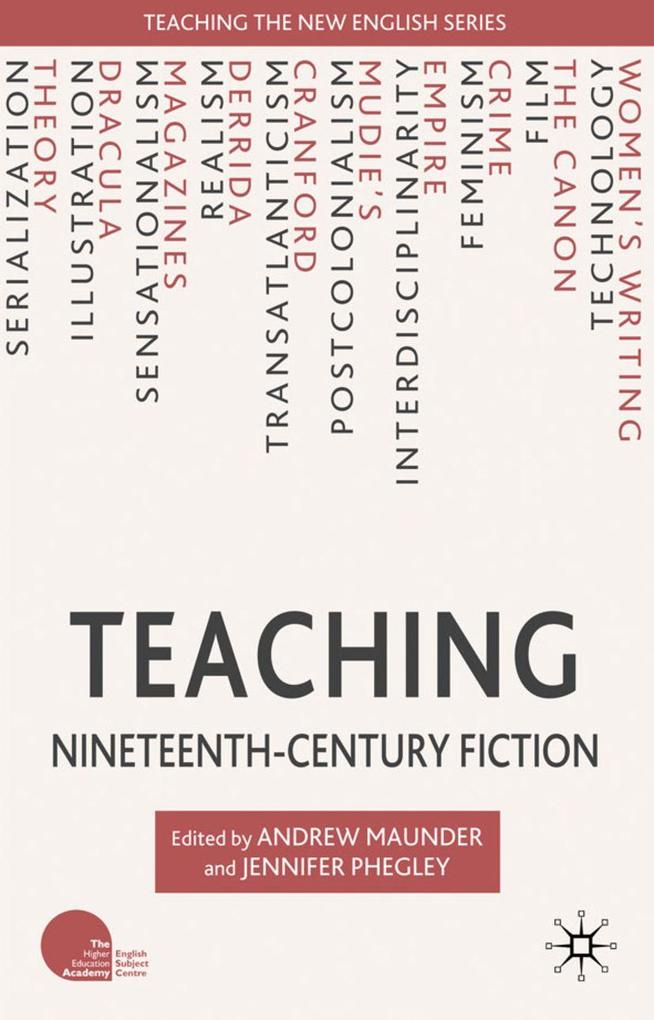
This book brings together the experiences of Anglo-American teachers and discusses some of the challenges which face teachers of nineteenth-century fiction, suggesting practical ways in which these might start to be overcome by considering the constantly changing canon, issues related to course design and the possibilities offered by film and ICT.
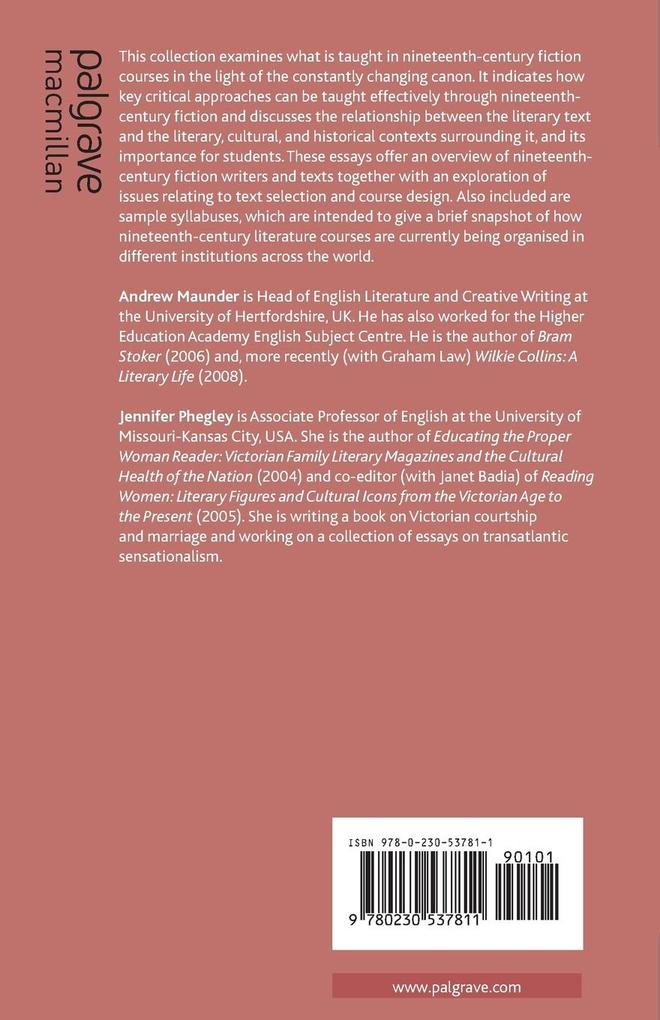
This collection examines what is taught in nineteenth-century fiction courses in the light of the constantly changing canon; indicates how key critical approaches can be taught effectively through nineteenth-century fiction; and discusses the relationship between the literary text and the literary, cultural, and historical contexts surrounding it, and its importance for students. These essays offer a chronology of nineteenth-century fiction writers and texts together with an exploration of issues relating to text selection and course design. Also included are sample syllabuses, the inclusion of which is intended to give a brief snapshot of how nineteenth-century literature courses are currently being organised in different institutions across the world. Experienced university teachers from the UK, USA and Ireland discuss and offer models for all aspects of the nineteenth century fiction syllabus
Inhaltsverzeichnis
Series Preface Notes on Contributors Introduction; A. Maunder & J. Phegley The Canon: Mapping Writers and Their Works; J. M. Allan 'Theory' and the Novel; J. Wolfreys Empire; P. Brantlinger Interdisciplinarity and Cultural Contexts; T. Mangum Women's Writing; T. Schaffer Teaching Genre: The Sensation Novel; J. Phegley The Short Story: Ghosts and Spectres; R. Robbins Fiction and the Visual Arts; R. Pearson Serial Reading; L. K. Hughes & M. Lund Film Adaptation: The Case of Wuthering Heights; T. R. Wright Rehabilitating the Nineteenth Century: The Revisionist Novel; G. Moore Transatlanticism; S. Alhlberg Primary Sources and the MA Student; J. Billington Technology and the World Wide Web; P. Joshi Further Reading Bibliography