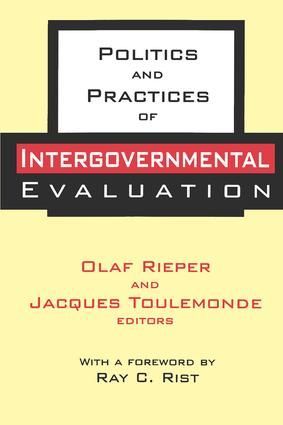
To understand local responsibilities and requirements, one must also understand the role that regional and national governmental agencies and administrations play. Politics and Practices of Intergovernmental Evaluation is a landmark work in the area of the evaluation of intergovernmental policies, programs, and projects. Comparative and cross-national in its perspective, the material presented here not only provides a systematic theoretical and empirical treatment of intergovernmental evaluation, but does so with case material from seven nations and the European Union. No other such comparative work exists on this topic. Politics and Practices of Intergovernmental Evaluation will be of interest to political theorists, policy-makers, and scholars and students of government and the evaluation community.
Inhaltsverzeichnis
Introduction: Politics and Practice of Intergovernmental Evaluation; Evaluation and Autonomy in Sweden; Evaluative Institutions in England and Wales: Weak Versions of Intergovernmental Evaluation; Evaluation in the United States: Cooperative But Not Intergovernmental; Two Cases in Intergovernmental Evaluation in Canada: "Parallel Play" and Cooperation Without Policy Consequences; Intergovernmental Evaluation of an EU-Funded Regional Development Program in Denmark; Europe and the Member States: Cooperating and Competing on Evaluation Grounds; Evaluation of the Federal Office of Environmental Protection: Across Two Levels of Government; Intergovernmental Evaluation: Patterns and Prospects