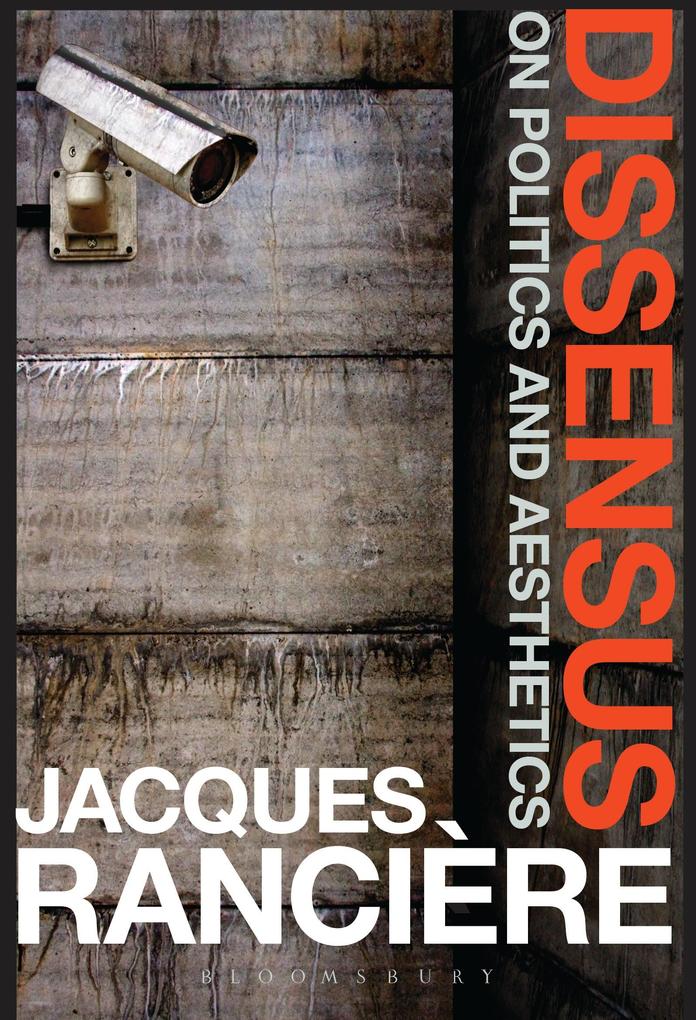
Dissensus: On Politics and Aesthetics brings together some of Jacques Ranciè re's key recent writings on art and politics to show the critical potential of two of his most important concepts: the aesthetics of politics and the politics of aesthetics.
In this illuminating collection, Ranciè re engages in a radical critique of some of his major contemporaries on questions of art and politics: Gilles Deleuze, Antonio Negri, Giorgio Agamben, Alain Badiou and Jacques Derrida. The essays show how Ranciè re's ideas can be used to analyse contemporary trends in both art and politics, including the events surrounding 9/11, war in the contemporary consensual age, and the ethical turn in aesthetics and politics. Ranciè re elaborates new directions for the concepts of politics and communism, as well as the notion of what a 'politics of art' might be.
With a brand new introduction from the translator this is a superb collection of the work of one of the world's most influential contemporary thinkers.
Inhaltsverzeichnis
Translator's Introduction \ Preface \ Part I: The Aesthetics of Politics \ 1. Ten Theses on Politics \ 2. Does Democracy Mean Something? \ 3. Who is the Subject of the Rights of Man? \ 4. Communism: From Actuality to Inactuality \ 5. The People or the Multitudes? \ 6. Biopolitics or Politics? \ 7. September 11 and Afterwards: A Rupture in the Symbolic Order? \ 8. Of War as the Supreme Form of Advanced Plutocratic Consensus \ Part II: The Politics of Aesthetics \ 9. The Aesthetic Revolution and its Outcomes \ 10. The Paradoxes of Political Art \ 11. The Politics of Literature \ 12. The Monument and its Confidences, or Deleuze and Art's Capacity for 'Resistance' \ 13. The Ethical Turn of Aesthetics and Politics \ Part III: Response to Critics \ 14. The Usage of Distinctions \ Index.