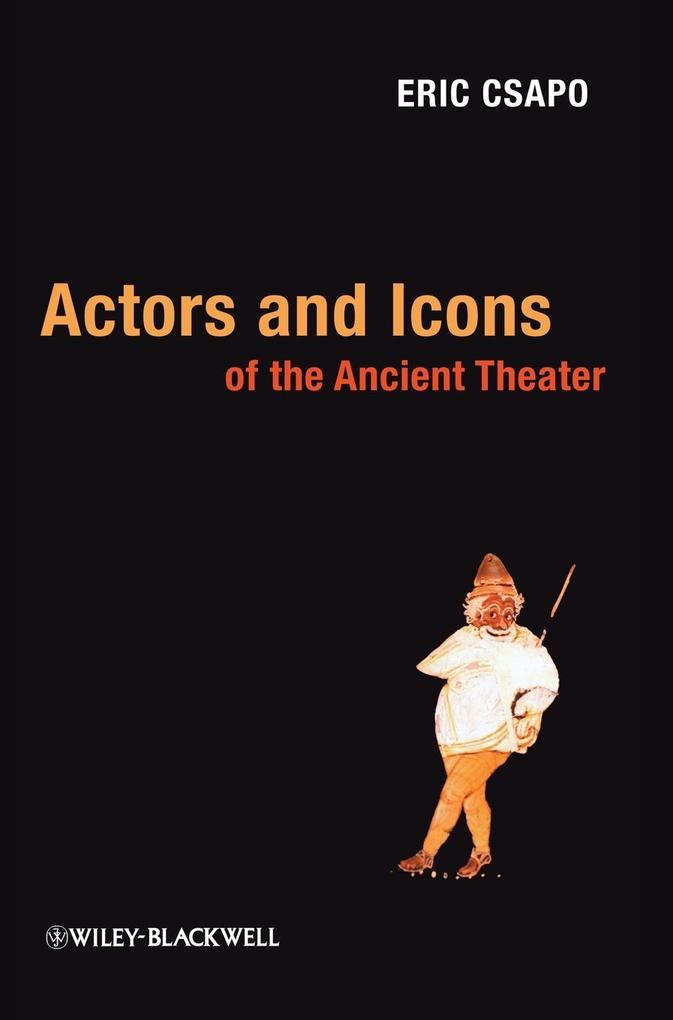
Actors and Icons of the Ancient Theater examines the realities of everyday life for actors -- and their popular reception -- from the time of theater's emergence in Classical Greece to its subsequent demise during the Roman Empire. In a series of six pioneering essays, noted Classical scholar Eric Csapo un-masks the ancient acting profession to reveal myriad facets of its social, economic, and political history. Along with addressing the evolving image of the actor in Attic and West Greek art, Csapo shows how the rapid expansion of the theater industry from about 430 BC provided the economic basis for the development of an independent and highly competitive acting profession. Other original studies reveal how the emergence of professional actors in the late fifth century changed the way tragedy and comedy were written, and what theater iconography tells us about the activity and performance styles of actors from the Hellenistic period to the Early Byzantine Empire. A final study addresses the history of the privatization of theater from Late Classical to Imperial times. Revelatory and thought-provoking, Actors and Icons of the Ancient Theater offers students and scholars alike fascinating new insights into the origins and evolution of one of the world's most enduring traditions.
Inhaltsverzeichnis
List of illustrations vi Preface viii
List of abbreviations xiii
1 A Portrait of the Artist I: Theater-Realistic Art in Athens, 500-330 BC 1
2 A Portrait of the Artist II: Theater-Realistic Art in the Greek West, 400-300 BC 38
3 The Spread of Theater and the Rise of the Actor 83
4 Kallippides on the Floor Sweepings: The Limits of Realism in Classical Acting 117
5 Cooking with Menander: Slices from the Ancient Home Entertainment Industry? 140
6 The Politics of Privatization: A Short History of the Privatization of Drama from Classical Athens to Early Imperial Rome 168
Bibliography 205
Index 227