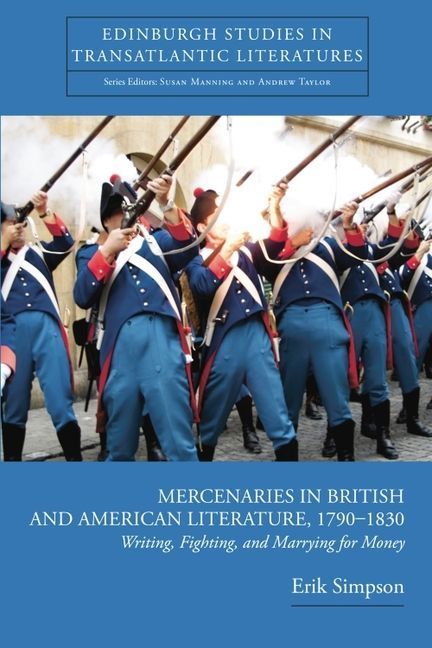
Erik Simpson calls attention to the mercenary in romantic literature and uncovers his significance within American and European contexts. The mercenary of popular imagination disregards patriotic feeling in favor of whichever commander pays best. Like the slave, the mercenary obeys a master with no claim to national, religious, or familial affiliation, and his choice to serve an alien master (often by crossing the Atlantic) stands at once for an overindulgence of freedom and the failure to appreciate its value. Simpson's primary research underpins a suggestive metaphorical and symbolic argument based on writings by Charles Brockden Brown, James Fenimore Cooper, Walter Scott, Jane Austen, Lord Byron, and Charlotte Smith.
Inhaltsverzeichnis
Introduction: Mercenary, Contractor, Volunteer, Slave; 1. Ormond's Fighters: Authorship, Soldiering, and the Transatlantic Charles Brockden Brown; 2. Encountering the Mercenary: Native American Auxiliaries, the American Revolution, and Charlotte Smith; 3. 'A Good One though Rather for the Foreign Market': Walter Scott, Lord Byron, and the Romantic Mercenary; 4. Loyalty, Independence, and James Fenimore Cooper's Revolution; 5. The Bravos of Venice; Epilogue: Mercenaries and the Modern Military; Works Cited; Index.