The Springer Handbook of Auditory Research presents a series of comp- hensive and synthetic reviews of the fundamental topics in modern au- tory research. The volumes are aimed at all individuals with interests in hearing research, including advanced graduate students, postdoctoral researchers, and clinical investigators. The volumes are intended to int- duce new investigators to important aspects of hearing science and to help established investigators to better understand the fundamental theories and data in ? elds of hearing that they may not normally follow closely. Each volume is intended to present a particular topic comprehensively, and each chapter will serve as a synthetic overview and guide to the lit- ature. As such, the chapters present neither exhaustive data reviews nor original research that has not yet appeared in peer-reviewed journals. The volumes focus on topics that have developed a solid data and conceptual foundation rather than on those for which a literature is only beginning to develop. New research areas will be covered on a timely basis in the series as they begin to mature.
Inhaltsverzeichnis
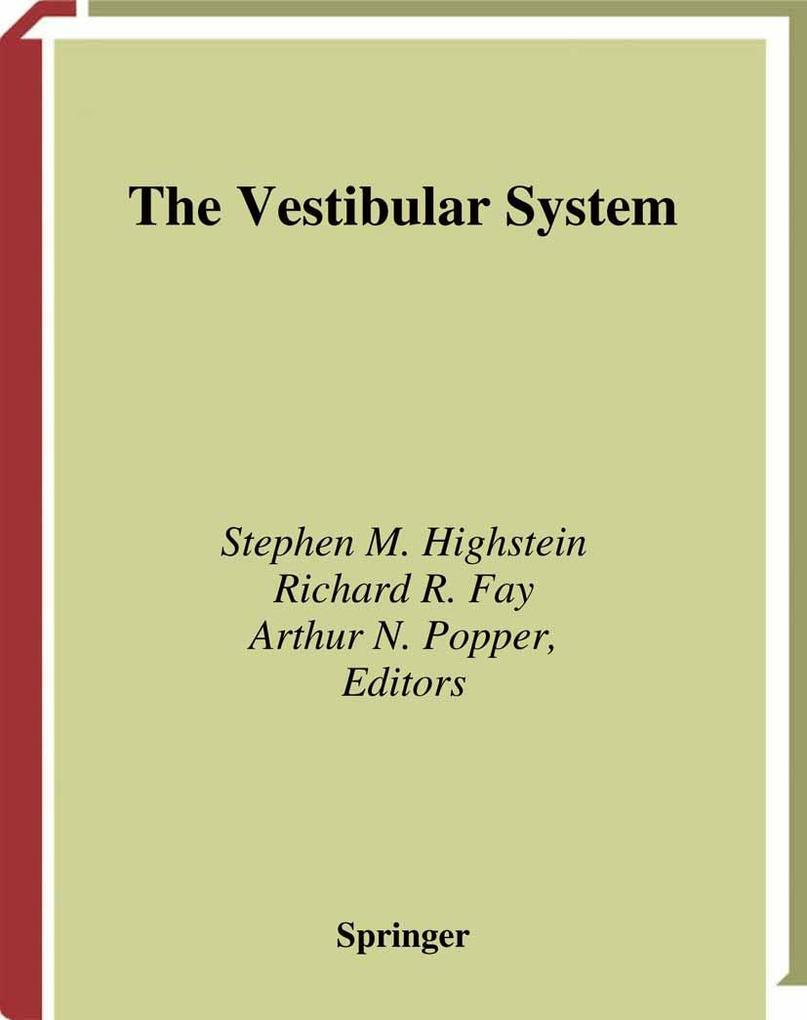
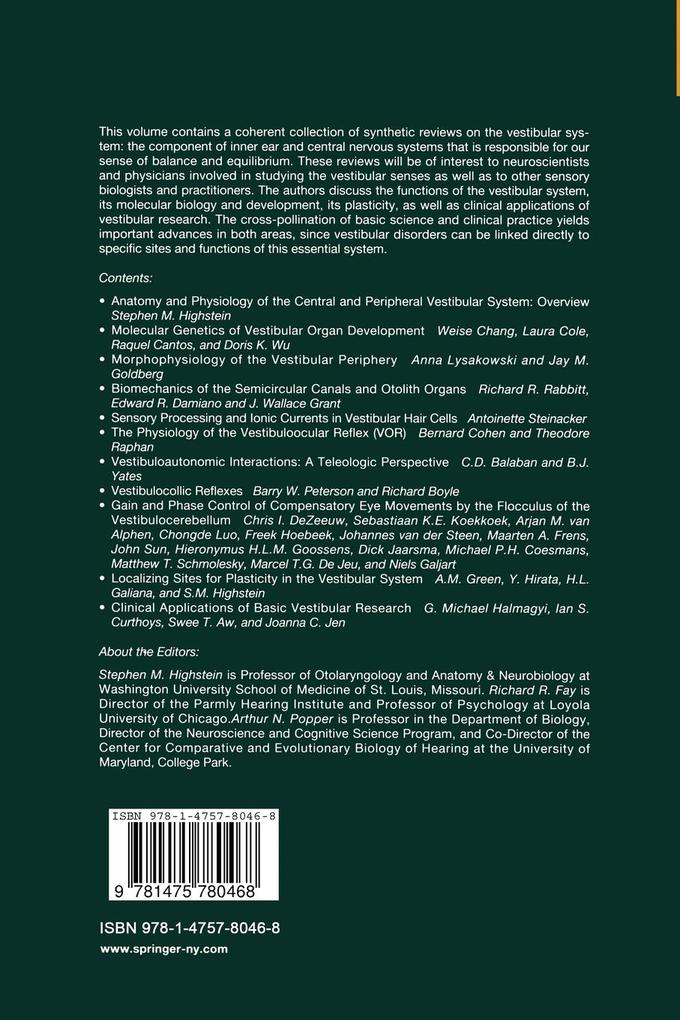
Anatomy and Physiology of the Central and Peripheral Vestibular System: Overview. - Molecular Genetics of Vestibular Organ Development. - Morphophysiology of the Vestibular Periphery. - Biomechanics of the Semicircular Canals and Otolith Organs. - Sensory Processing and Ionic Currents in Vestibular Hair Cells. - The Physiology of the Vestibuloocular Reflex (VOR). - Vestibuloautonomic Interactions: A Teleologic Perspective. - Vestibulocollic Reflexes. - Gain and Phase Control of Compensatory Eye Movements by the Flocculus of the Vestibulocerebellum. - Localizing Sites for Plasticity in the Vestibular System. - Clinical Applications of Basic Vestibular Research.