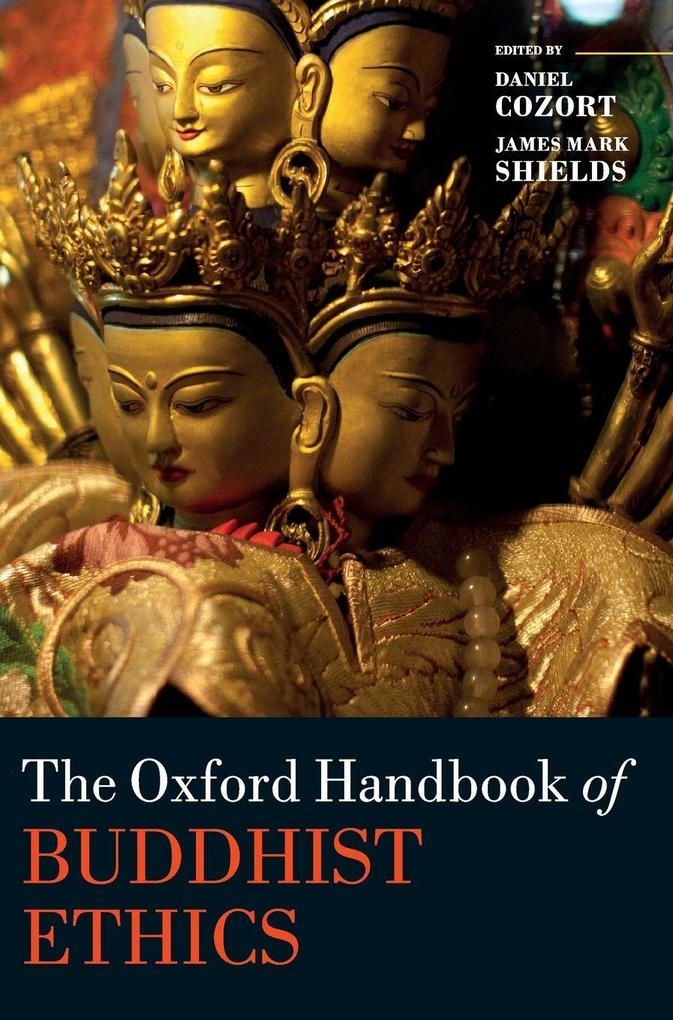
A comprehensive overview of the study of Buddhist ethics in the twenty-first century. This collection offers an invaluable reference resource for current and future scholars in this burgeoning field of study.
Many forms of Buddhism, divergent in philosophy and style, emerged as Buddhism filtered out of India into other parts of Asia. Nonetheless, all of them embodied an ethical core that is remarkably consistent. Articulated by the historical Buddha in his first sermon, this moral core is founded on the concept of karma--that intentions and actions have future consequences for an individual--and is summarized as Right Speech, Right Action, and Right Livelihood, three of the elements of the Eightfold Path. Although they were later elaborated and interpreted in a multitude of ways, none of these core principles were ever abandoned. The Oxford Handbook of Buddhist Ethics provides a comprehensive overview of the field of Buddhist ethics in the twenty-first century. The Handbook discusses the foundations of Buddhist ethics focusing on karma and the precepts looking at abstinence from harming others, stealing, and intoxication. It considers ethics in the different Buddhist traditions and the similarities they share, and compares Buddhist ethics to Western ethics and the psychology of moral judgments. The volume also investigates Buddhism and society analysing economics, environmental ethics, and Just War ethics. The final section focuses on contemporary issues surrounding Buddhist ethics, including gender, sexuality, animal rights, and euthanasia. This groundbreaking collection offers an indispensable reference work for students and scholars of Buddhist ethics and comparative moral philosophy.
Inhaltsverzeichnis
- Introduction
- Part I: Foundations
- 1: Peter Harvey: Karma
- 2: Paul Groner: The Bodhisattva Precepts
- 3: Justin Whitaker and Douglass Smith: Ethics, Meditation, and Wisdom
- Part II: Ethics and Buddhist Traditions
- 4: Martin T. Adams: Moral Development in Early Buddhist Literature
- 5: Charles S. Prebish: The Vinaya
- 6: Bhikkhu Analayo: Bhiksuni Ordination
- 7: Barbra Clayton: The Changing Way of the Bodhisattva
- 8: Bronwyn Finnegan: Madhyamaka Ethics
- 9: Michael Conway: Ethics in Pure Land Schools
- 10: Gene Reeves: A Perspective on Ethics in the Lotus Sutra
- 11: Christopher Ives: Ethics in Zen
- 12: Gareth Sparham: Tantric Ethics
- 13: Juliana Essen: Buddhist Ethics in South and Southeast Asia
- 14: Richard Madsen: East Asian Buddhist Ethics
- 15: Holly Gayley: Buddhist Ethics in Contemporary Tibet
- Part III: Comparative Perspectives
- 16: S lav din Meynard Vasen: Buddhist Ethics Compared to Western Ethics
- 17: Emily McRae: Buddhism and the Psychology of Moral Judgments
- 18: Dan Arnold: Buddhist Reductionism and the Logical Space of Reasons
- Part IV: Buddhism and Society
- 19: Peter Harvey: The Buddhist Just Society
- 20: James Mark Shields: Buddhist Economics
- 21: Stephanie Kaza: Buddhist Environmental Ethics
- 22: Michael Jerryson: Buddhism, War, and Violence
- 23: Sallie B. King: The Ethics of Engaged Buddhism in Asia
- 24: Christopher Queen: The Ethics of Engaged Buddhism in the West
- Part V: Contemporary Issues
- 25: Damien Keown: The Buddhist Basis for a Doctrine of Human Rights
- 26: Alice Collett: Buddhism and Women
- 27: Amy Paris Langenberg: Buddhism and Sexuality
- 28: Michael Barnhart: Buddhist Perspectives on Abortion and Reproduction
- 29: Damien Keown: Buddhism and Euthanasia
- 30: Martin Kovan: Suicide in Buddhist Ethics
- 31: Paul Waldau: Buddhism and Animal Rights