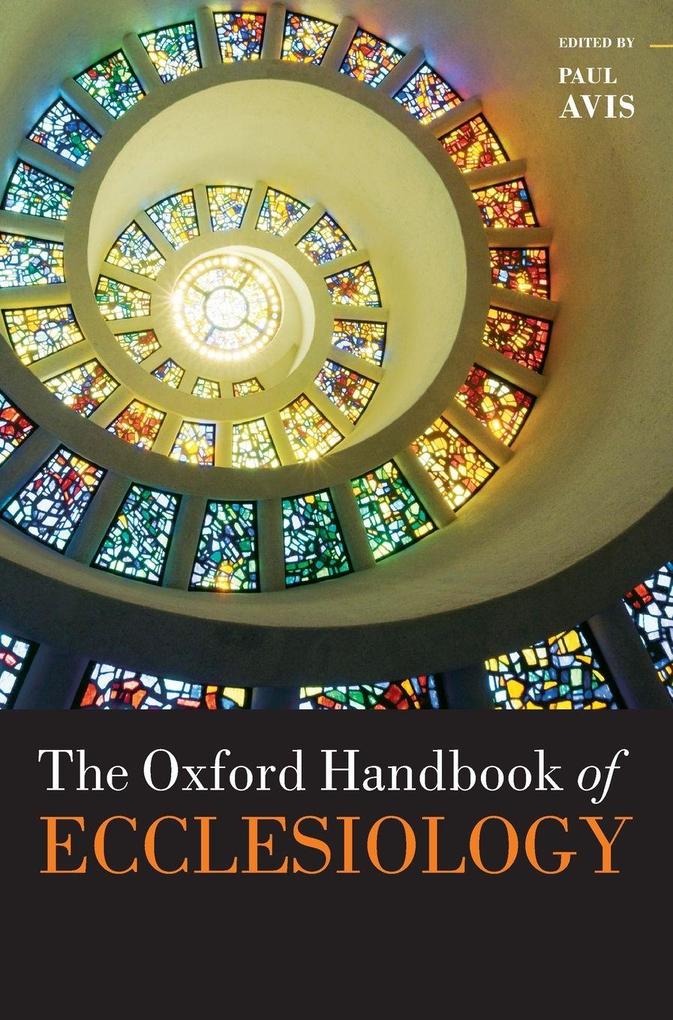
The Handbook provides a unique scholarly resource for the study of the Christian Church as we find it in the Bible, in history and today.
The Oxford Handbook of Ecclesiology is a unique scholarly resource for the study of the Christian Church as we find it in the Bible, in history and today. As the scholarly study of how we understand the Christian Church's identity and mission, ecclesiology is at the centre of today's theological research, reflection, and debate. Ecclesiology is the theological driver of the ecumenical movement. The main focus of the intense ecumenical engagement and dialogue
of the past half-century has been ecclesiological and this is the area where the most intractable differences remain to be tackled Ecclesiology investigates the Church's manifold self-understanding in relation to a number of areas: the origins, structures, authority, doctrine, ministry, sacraments, unity,
diversity, and mission of the Church, including its relation to the state and to society and culture. The sources of ecclesiological reflection are the Bible (interpreted in the light of scholarly research), Church history and the wealth of the Christian theological tradition, together with the information and insights that emerge from other relevant academic disciplines. This Handbook considers the biblical resources, historical development, and contemporary initiatives in
ecclesiology. It offers invaluable and comprehensive guide to understanding the Church.
Inhaltsverzeichnis
- List of contributors
- 1: Paul Avis: Introduction to Ecclesiology
- Part I: Biblical Foundations
- 2: R. W. L. Moberly: The Ecclesiology of Israel's Scriptures
- 3: Loveday Alexander: The Church in the Synoptic Gospels and the Acts of the Apostles
- 4: Andrew T. Lincoln: The Johannine vision of the Church
- 5: Edward Adams: The Shape of the Pauline Churches
- 6: Gerald O'Collins, SJ: The Church in the General Epistles
- Part II: Resources from the Tradition
- 7: Mark Edwards: Early Ecclesiology in the West
- 8: Andrew Louth: The Eastern Orthodox Tradition
- 9: Norman Tanner, SJ: Medieval Ecclesiology and the Conciliar Movement
- 10: Dorothea Wendebourg: The Church in the Magisterial Reformers
- 11: Paul Avis: Anglican Ecclesiology
- 12: Ormond Rush: Roman Catholic Ecclesiology from the Council of Trent to Vatican II and Beyond
- 13: Paul S. Fiddes: Baptist Concepts of the Church and their Antecedents
- 14: David M. Chapman: Methodism and the Church
- 15: Amos Yong: Pentecostal Ecclesiologies
- Part III: Major Modern Ecclesiologists
- 16: Kimlyn J. Bender: Karl Barth
- 17: Gabriel Flynn: Yves Congar
- 18: Gabriel Flynn: Henri de Lubac
- 19: Richard Lennan: Karl Rahner
- 20: Theodor Dieter: Joseph Ratzinger
- 21: Paul McPartlan: John Zizioulas
- 22: Friederike Nüssel: Wolfhart Pannenberg
- 23: Mike Higton: Rowan Williams
- Part IV: Contemporary Movements in Ecclesiology
- 24: Elaine Graham: Feminist Critiques, Visions, and Models of the Church
- 5: Neil Ormerod: Social Science and Ideological Critiques of Ecclesiology
- 26: Michelle A. Gonzalez: Liberationist Ecclesiologies with Special Reference to Latin America
- 27: Simon Chan: Asian Ecclesiologies
- 27: Stan Chu Ilo: African Ecclesiologies