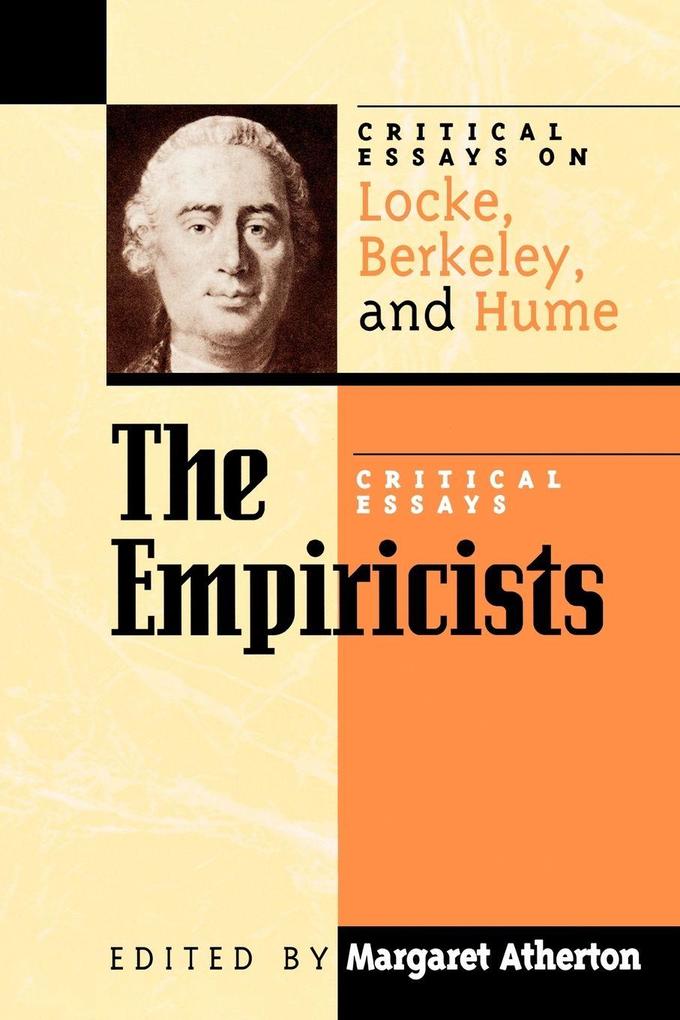
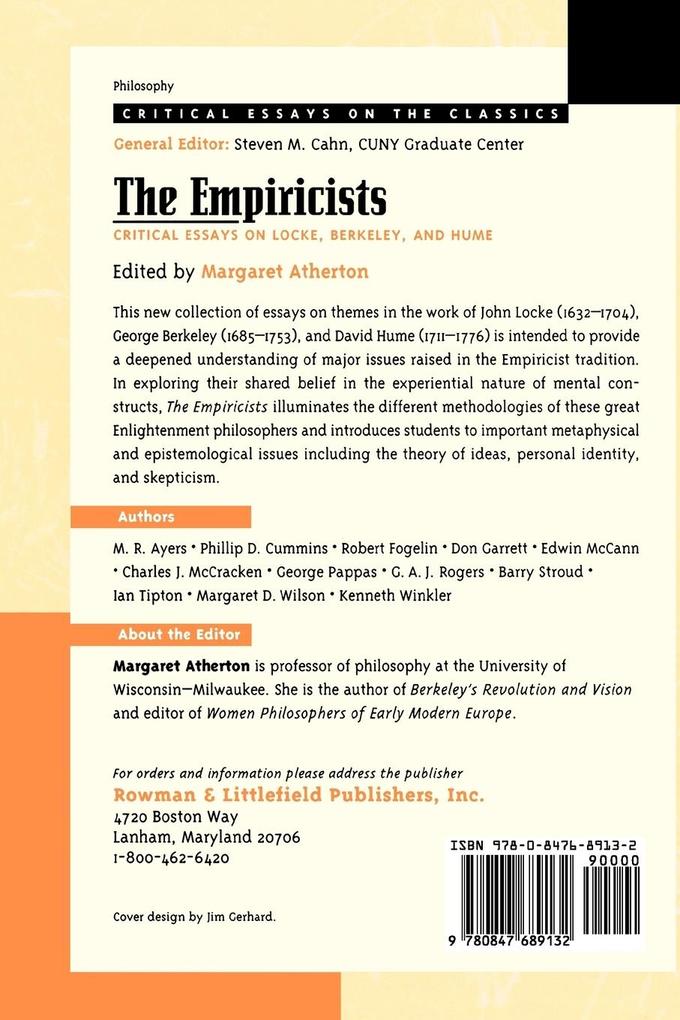
This collection of essays on themes in the work of John Locke (1632-1704), George Berkeley (1685-1753), and David Hume (1711-1776), provides a deepened understanding of major issues raised in the Empiricist tradition. In exploring their shared belief in the experiential nature of mental constructs, The Empiricists illuminates the different methodologies of these great Enlightenment philosophers and introduces students to important metaphysical and epistemological issues including the theory of ideas, personal identity, and skepticism. It will be especially useful in courses devoted to the history of modern philosophy.
Inhaltsverzeichnis
Part 1 Introduction
Part 2 Acknowledgements
Chapter 3 1 "Ideas" and "Objects": Locke on Perceiving "Things"
Chapter 4 2 The Foundations of Knowledge and the Logic of Substance: The Structure of Locke's General Philosophy
Chapter 5 3 Locke, Law, and the Law of Nature
Chapter 6 4 Locke on Identity: Matter, Life, and Consciousness
Chapter 7 5 Berkeley's Ideas of Sense
Chapter 8 6 Did Berkeley Completely Misunderstand the Basis of the Primary-Secondary Quality Distinction in Locke?
Chapter 9 7 Berkeleian Idealism and Impossible Performances
Chapter 10 8 Berkeley's Notion of Spirit
Chapter 11 9 The Representation of Causation and Hume's Two Definitions of Cause
Chapter 12 10 Hume's Inductive Scepticism
Chapter 13 11 The Soul and the Self
Chapter 14 12 Hume's Scepticism: Natural Instincts and Philosophical Reflection
Part 15 Selected Bibliography
Part 16 Authors