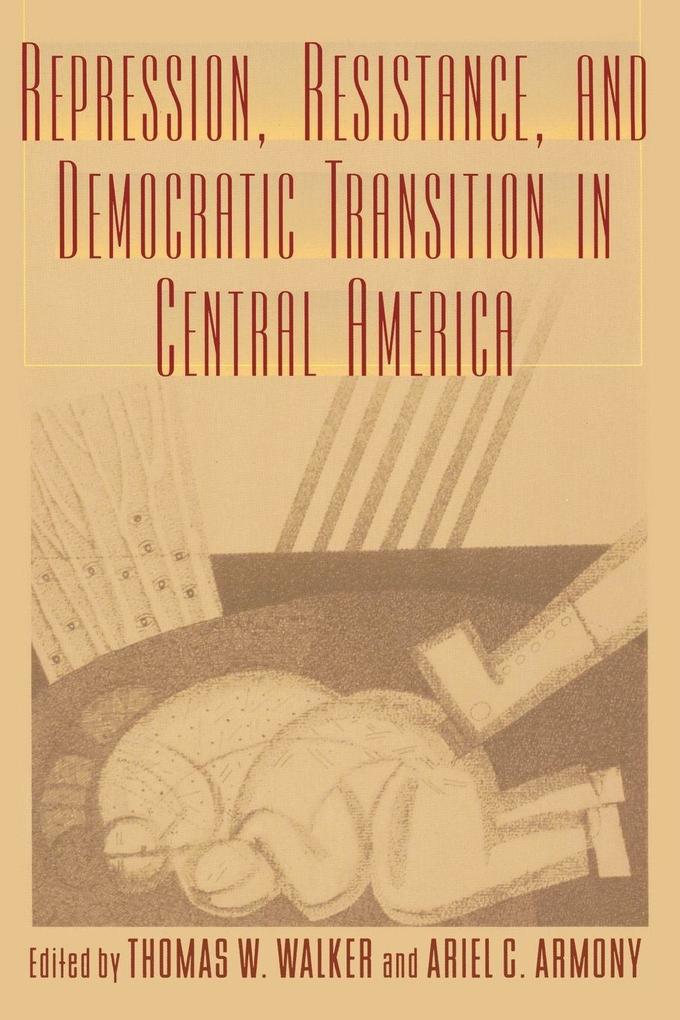
For Central America, the last third of the twentieth century was a time of dramatic change in which most countries shifted from dictatorships to formal political democracy. The process of transition in most Central American countries was made possible only through violent conflict-costing over 350, 000 lives-which either toppled the dictatorships or forced them to negotiate transition to a more democratic system.
Repression, Resistance, and Democratic Transition in Central America shows how revolt and revolution serve as the motors of political change in this region. The book systematically examines the various ways in which democratic transition has taken place-all of which have been distinct from countries in South America, where democratization was relatively sudden and peaceful. Written by leading scholars, Repression, Resistance, and Democratic Transition in Central America examines the major forces shaping change in the region and provides the recent political history of all six Central American countries: Nicaragua, El Salvador, Guatemala, Honduras, Costa Rica, and Panama.
Each country's particular transition adds to the reader's understanding of democratization in the late twentieth century. Democracy is viewed in broad terms, allowing the contributors to focus on each country's unique development, along with presentation of the major themes in the social, political, and economic history of these nations. These cases raise questions about the behavior and values of elites and masses in the transition to and in the deepening of democracy. As this book reveals, external actors-particularly the United States, the Organization of American States and the United Nations-had a significant impact on political conversion. The relationship between neoliberalism and democracy is also addressed. This new text is ideal for courses in Latin American history and politics, as well as courses focusing on the transition to democracy in Latin America.
Inhaltsverzeichnis
Chapter 1 Introduction: Concepts, Issues, and Background
Part 2 I The Countries
Chapter 3 Guatemala: Intervention, Repression, Revolt, and Negotiated Transition
Chapter 4 El Salvador: Revolt and Negotiated Transition
Chapter 5 Honduras: Militarism and Democratization in Troubled Waters
Chapter 6 Nicaragua: Transition through Revolution
Chapter 7 Costa Rica: Buffeted Democracy
Chapter 8 Panama: Militarism and Imposed Transition
Part 9 II The Forces
Chapter 10 External Actors: Other States
Chapter 11 External Actors: The United Nations and the Organization of American States
Chapter 12 Religion in the Central American Embroglio
Chapter 13 Neoliberalism in Central America
Chapter 14 Civil Society and Democratic Transition
Chapter 15 Conclusion: Conceptual Issues on Democratization in Central America
Chapter 16 Index
Chapter 17 About the Contributors