








Das eBook.de Hörbuch Abo - jederzeit, überall, für nur 7,95 € monatlich!
Jetzt entdecken
mehr erfahren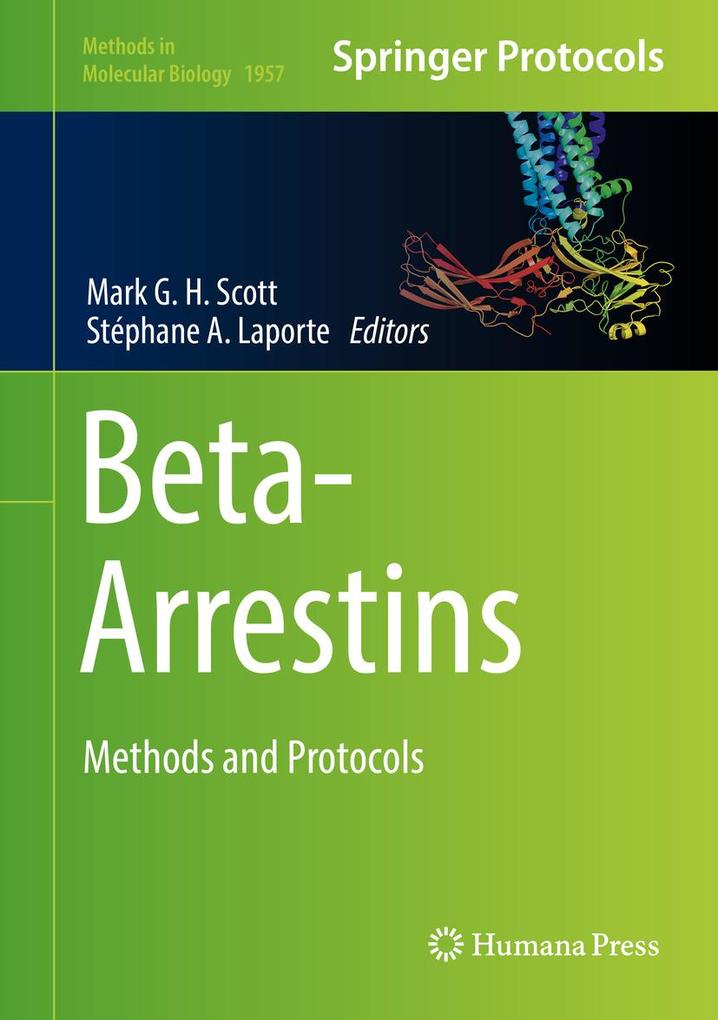
This volume looks at various approaches to study the pleiotropic roles of b-arrestins (b-arrs) in the control of signal transduction, and the resulting cellular and in vivo consequences that arise. The chapters in this book cover diverse topics around b-arrs such as their established roles in GPCR regulation and trafficking; regulatory scaffolding functions of b-arrs in MAPK signaling, cAMP hydrolysis and cytoskeletal dynamics; proteomic analysis of the b-arr interactome; mathematical modelling of b-arr signaling networks; functional selectivity involving biased ligands; nucleocytoplasmic trafficking and primary cilia-associated functions of b-arrs; conformational plasticity of b-arrs; and the roles of b-arrs in allergic inflammation, Type 2 Diabetes, Parkinson's disease, and cancer. Written in the highly successful Methods in Molecular Biology series format, chapters include introductions to their respective topics, lists of the necessary materials and reagents, step-by-step, readily reproducible laboratory protocols, and tips on troubleshooting and avoiding known pitfalls.
Inhaltsverzeichnis
A Brief History of the b-Arrestins. - b-Arrestins: Multitask Scaffolds Orchestrating the Where and When In Cell Signaling. - Methods to Monitor the Trafficking of ß-Arrestin/G Protein-Coupled Receptor Complexes using Enhanced Bystander BRET. - Methods to Investigate b-Arrestin-Mediated Regulation of GPCR Function in Human Airway Smooth Muscle. - Measuring Recruitment of b-Arrestin to G Protein-Coupled Heterodimers using Bioluminescence Resonance Energy Transfer. - Detection of ß-Arrestin-Mediated G Protein-Coupled Receptor Ubiquitination using BRET. - Using In Vitro Pull-Down and In Cell Overexpression Assays to Study Protein Interactions with Arrestin. - Methods to Investigate Arrestins in Complex with Phosphodiesterases. - Methods to Characterize Protein Interactions with ß-arrestin
in cellulo. -
Methods to Investigate the ß-Arrestin-Mediated control of ARF6 Activation to Regulate Trafficking and Actin Cytoskeleton Remodeling. - Methods to Investigate the Roles of b-Arrestin-Dependent RalGDS Activation in GPCR-Stimulated Membrane Blebbing. - Methods to Determine Interaction Interfaces between b-Arrestins and Their Protein Partners. - Workflow Description to Dynamically Model ß-Arrestin Signaling Networks. - Proteomic Analysis of the ß-Arrestin Interactome. - Quantitating Ligand Bias using the Competitive Model of Ligand Activity. - Methods to Investigate the Nucleocytoplasmic Shuttling Properties of b-Arrestins. - Monitoring ß-Arrestin2 Targeting to the Centrosome, Basal Body and Primary Cilium by Fluorescence Microscopy. - A Mass Spectrometry-Based Structural Assay for Activation-Dependent Conformational Changes in ß-Arrestins. - Probing Arrestin Function using Intramolecular FlAsH-BRET Biosensors. - Methods to Study the Roles of b-Arrestins in Meningococcal Signaling. - Methods to Investigate the Roles for ß-Arrestin2 in Allergic Inflammatory Airway Disease. - Methods to Study Roles of ß-Arrestins in the Regulation of Pancreatic ß-Cell Function. - Methods to Investigate ß-Arrestin Function in Metabolic Regulation. - Methods to Investigate the Role of b-Arrestin Signaling in Parkinson' s Ddisease. - Methods to Investigate ß-Arrestin-1/ß-Catenin Signaling in Ovarian Cancer Cells.
Es wurden noch keine Bewertungen abgegeben. Schreiben Sie die erste Bewertung zu "Beta-Arrestins" und helfen Sie damit anderen bei der Kaufentscheidung.