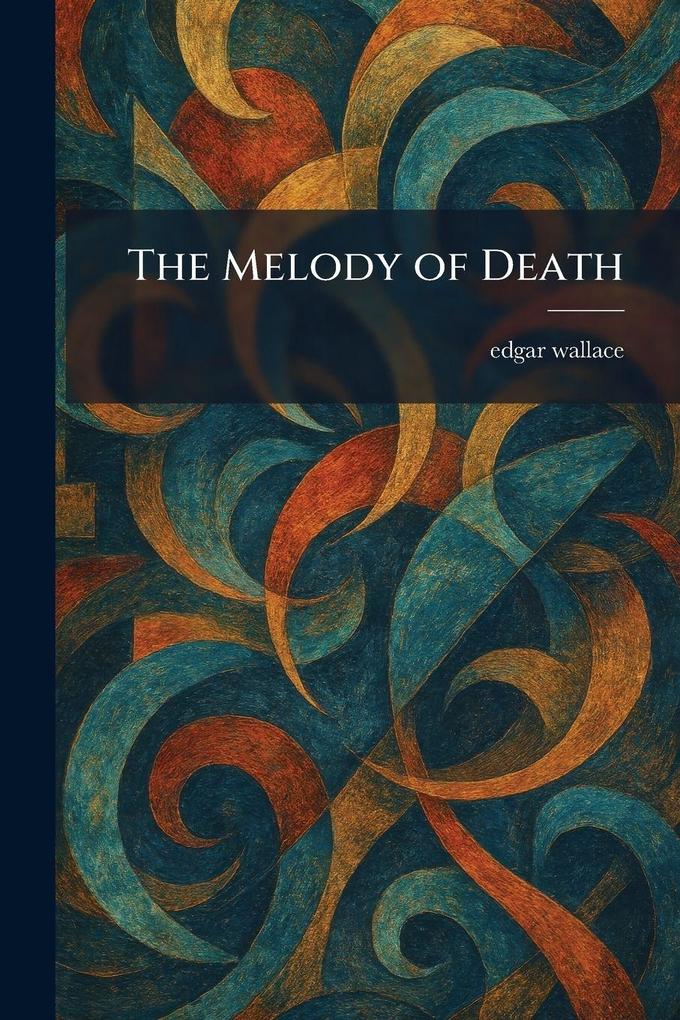
"The Melody of Death" is a gripping mystery and suspense novel by the legendary master of the thriller, Edgar Wallace. The story follows the enigmatic Gilbert Standerton, a man who finds himself inextricably linked to a series of baffling events and a haunting musical refrain that seems to portend doom. As a shadow hangs over his life and those around him, the narrative delves into a world of secret societies, high-stakes crime, and the pursuit of hidden wealth.
Wallace expertly crafts a plot filled with intrigue, where every character harbors a secret and the tension builds with every turn of the page. The novel explores themes of obsession and the psychological impact of fear, all set against the atmospheric backdrop of early 20th-century London. Known for his fast-paced storytelling and clever plot twists, Wallace delivers a classic piece of detective fiction that keeps readers guessing until the final revelation.
With its blend of atmosphere and action, "The Melody of Death" stands as a testament to Edgar Wallace's enduring legacy in the crime genre. It remains a compelling read for fans of vintage mysteries and those who enjoy a well-constructed tale of shadows and suspense.
This work has been selected by scholars as being culturally important, and is part of the knowledge base of civilization as we know it. This work was reproduced from the original artifact, and remains as true to the original work as possible. Therefore, you may see the original copyright references, library stamps (as most of these works have been housed in our most important libraries around the world), and other notations in the work.
This work is in the public domain in the United States of America, and possibly other nations. Within the United States, you may freely copy and distribute this work, as no entity (individual or corporate) has a copyright on the body of the work.
As a reproduction of a historical artifact, this work may contain missing or blurred pages, poor pictures, errant marks, etc. Scholars believe, and we concur, that this work is important enough to be preserved, reproduced, and made generally available to the public. We appreciate your support of the preservation process, and thank you for being an important part of keeping this knowledge alive and relevant.