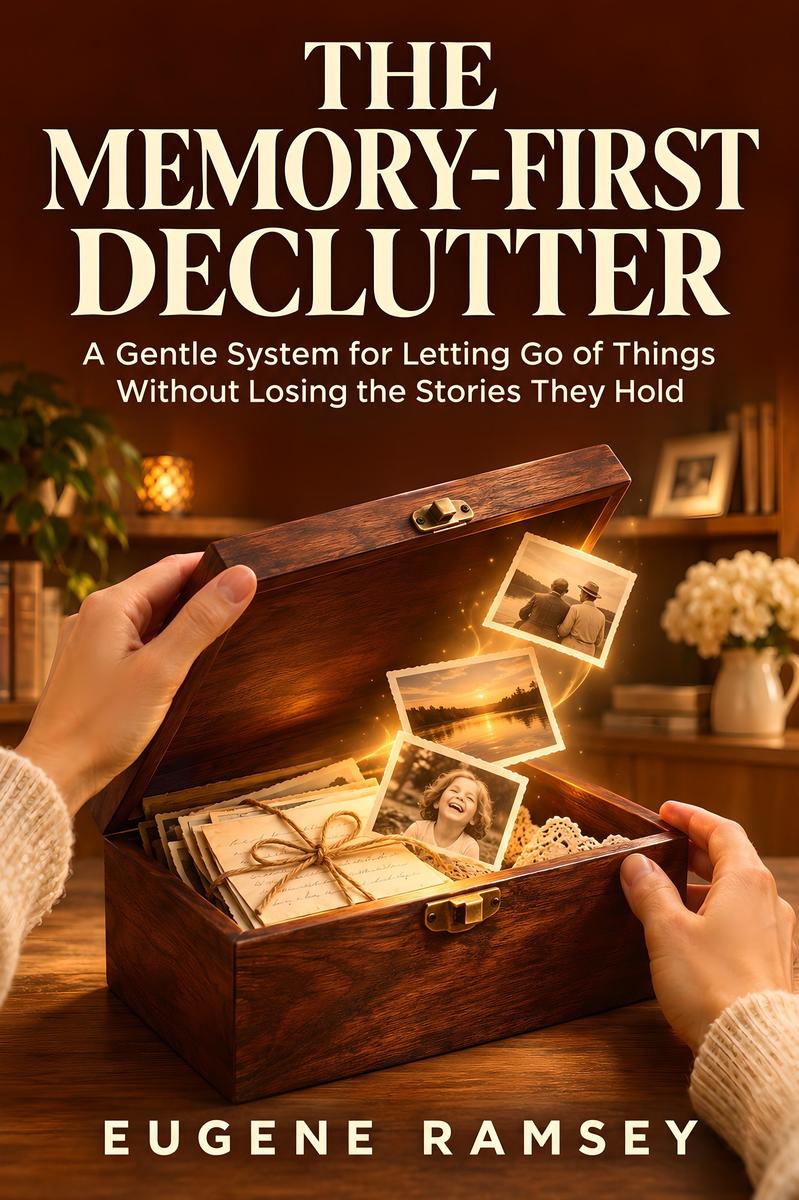
The hardest box to declutter is not full of junk. It is full of stories: a watch that no longer runs, a bundle of birthday cards, a child's first shoe, a program from a funeral. Ordinary decluttering advice says decide fast and let it go, but when an object carries a memory, speed feels like loss. This book offers a slower, kinder order of work: protect the story first, and only then decide what happens to the thing itself.
The memory-first method fits on one sheet of paper. Survey one bounded area, record the story each important object holds, sort it into one of six paths - keep, donate, digitize, gift, repair, or release - house the keepers well, document what leaves, and return for gentle maintenance. Keeping is a valid outcome throughout: a smaller, well-kept archive beats a ruthless purge you regret.
Inside, you will learn:
How to write, record, or film a short story record before any object leaves
The six paths for one object, and the questions that choose between them
A calm way through photographs, albums, letters, journals, and fragile paper
How to handle inherited furniture, dishes, jewelry, and tools without obligation running the decision
What to save from childhood, and how to involve your child in the choosing
How to digitize photographs and papers with naming, backup, and privacy intact
How to sort during grief, settle family disagreements fairly, and work in small sessions when energy is limited
The chapters move category by category through a real house and a real life: photographs and fading days, letters and paper memory, clothing and the body's memory, collections built over decades, and the privacy questions that come with diaries, identity documents, and digital accounts. Small homes get their own adaptations, and readers with limited energy get sessions designed for chronic pain, mobility limits, and busy seasons.
This book is for anyone who has closed a box and walked away because deciding felt like betraying someone they love. It is also for adult children sorting a parent's home, collectors whose shelves have become a burden, and families who disagree about what fairness means when the same objects carry different memories for each of them.
You will not be asked to chase a minimalist ideal or meet a discard quota. You will finish with a home that holds its stories on purpose: keepers housed where they can be used and loved, records that keep memories available after objects move on, and a simple maintenance rhythm that keeps the archive, and the peace, intact.
Es wurden noch keine Bewertungen abgegeben. Schreiben Sie die erste Bewertung zu "The Memory-First Declutter" und helfen Sie damit anderen bei der Kaufentscheidung.











