







Das eBook.de Hörbuch Abo - jederzeit, überall, für nur 7,95 € monatlich!
Jetzt entdecken
mehr erfahren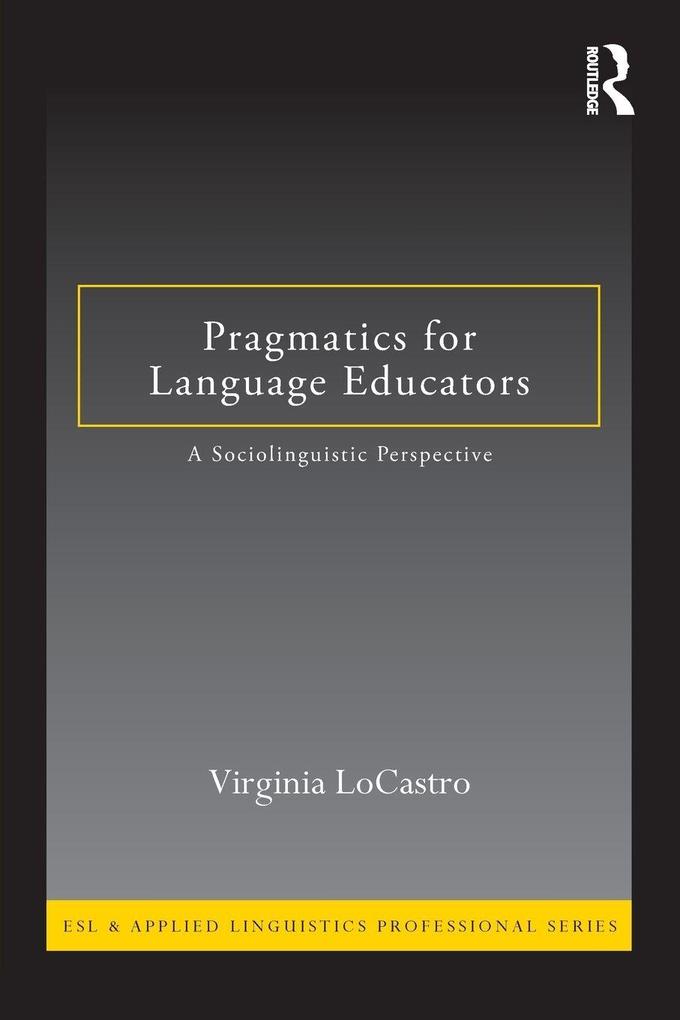
This text makes pragmatics accessible to a wide range of language professionals through explanations of topics and concepts that are often difficult for uninitiated readers, a wealth of examples, and attention to the needs of readers who are non-native English speakers. Arnulfo G. Ramirez, The Modern Language Journal
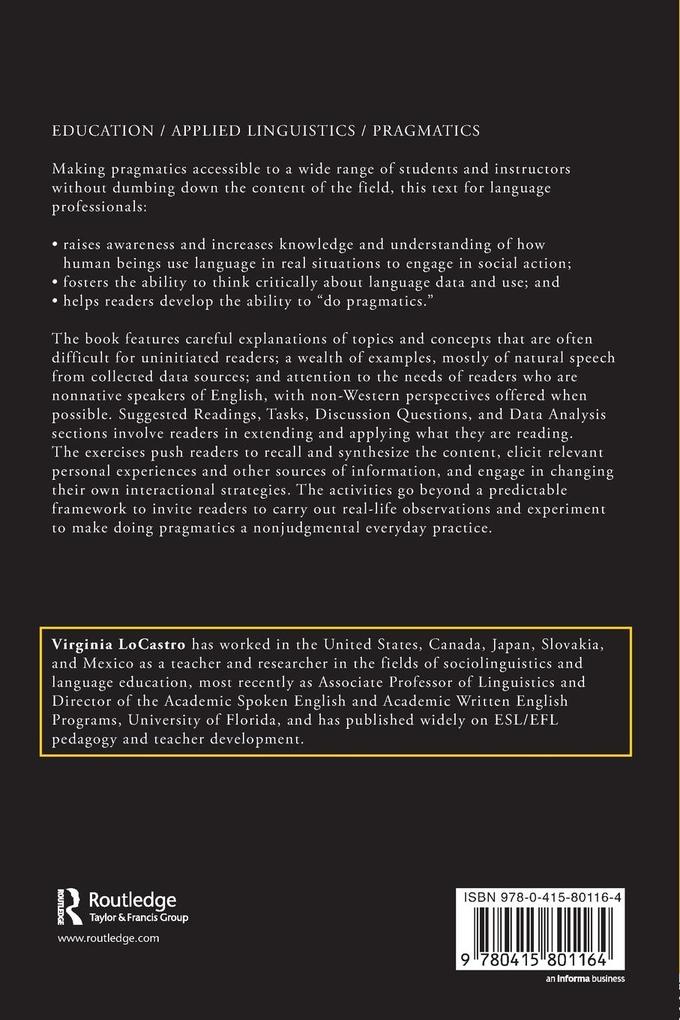
Making pragmatics accessible to a wide range of students and instructors without dumbing down the content of the field, this text for language professionals:
The book features careful explanations of topics and concepts that are often difficult for uninitiated readers, a wealth of examples, mostly of natural speech from collected data sources, and attention to the needs of readers who are non-native speakers of English, with non-Western perspectives offered when possible. Suggested Readings, Tasks, Discussion Questions, and Data Analysis sections involve readers in extending and applying what they are reading. The exercises push readers to recall and synthesize the content, elicit relevant personal experiences and other sources of information, and engage in changing their own interactional strategies. The activities go beyond a predictable framework to invite readers to carry out real life observations and experiment to make doing pragmatics a nonjudgmental everyday practice.
Inhaltsverzeichnis
Preface
Acknowledgements
List of transcription conventions
I. What is pragmatics?
1. Defining the territory
2. Principles of pragmatic meaning
3. Sociolinguistic theories of pragmatic meaning
II. Core areas of pragmatics
4. Cross-cultural pragmatics
5. Interlanguage pragmatics
6. Politeness
7. Interactional construction of identity
8. Institutional Talk
9. Language, gender, and power
10. Classroom pragmatic development
III. Research in sociopragmatics
11. Guidelines for small sociopragmatics projects
12. Ideas for research projects in socipragmatics
IV. Conclusion
13. Pragmatic competence in our diverse world
"This useful textbook offers readers a dynamic approach to understanding how people use language in real-life social situations. The author's goal is "to help both novices and experienced researchers . . . expand their awareness of the social aspects of language in use" (p. xi)." Arnulfo G. Ramirez, The Modern Language Journal
Es wurden noch keine Bewertungen abgegeben. Schreiben Sie die erste Bewertung zu "Pragmatics for Language Educators" und helfen Sie damit anderen bei der Kaufentscheidung.