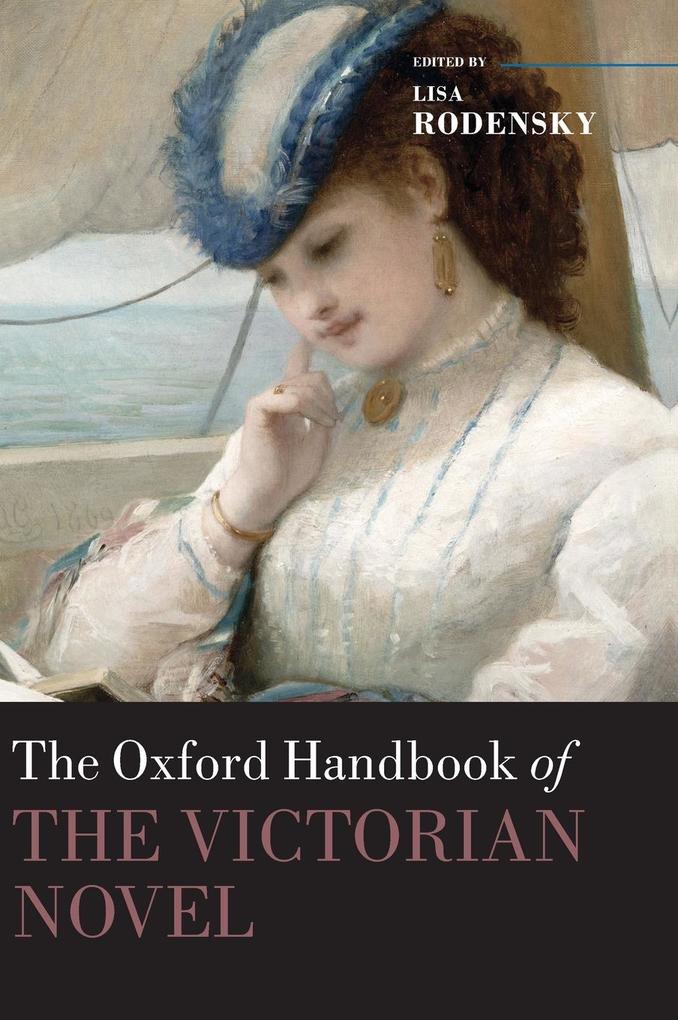
Much has been written about the Victorian novel, and for good reason. The cultural power it exerted (and, to some extent, still exerts) is beyond question. The Oxford Handbook of the Victorian Novel contributes substantially to this thriving scholarly field by offering new approaches to familiar topics (the novel and science, the Victorian Bildungroman) as well as essays on topics often overlooked (the novel and classics, the novel and the OED, the
novel, and allusion). Manifesting the increasing interdisciplinarity of Victorian studies, its essays situate the novel within a complex network of relations (among, for instance, readers, editors, reviewers, and the novelists themselves; or among different cultural pressures - the religious, the commercial, the
legal). The handbook's essays also build on recent bibliographic work of remarkable scope and detail, responding to the growing attention to print culture. With a detailed introduction and 36 newly commissioned chapters by leading and emerging scholars - beginning with Peter Garside's examination of the early nineteenth-century novel and ending with two essays proposing the 'last Victorian novel' - the handbook attends to the major themes in Victorian scholarship while at the same time
creating new possibilities for further research. Balancing breadth and depth, the clearly-written, nonjargon -laden essays provide readers with overviews as well as original scholarship, an approach which will serve advanced undergraduates, graduate students, and established scholars. As the Victorians
get further away from us, our versions of their culture and its novel inevitably change; this Handbook offers fresh explorations of the novel that teach us about this genre, its culture, and, by extension, our own.
Inhaltsverzeichnis
- Introduction
- Beginnings.
- The Early Nineteenth-Century English Novel, 1820-1836
- New Histories of English Literature and the Rise of the Novel, 1835-1859
- Genre, Criticism and the Early Victorian Novel
- Publishing, Reading, Reviewing, Quoting, Censoring.
- Publishing the Victorian Novel
- The Victorian Novel and Its Readers
- The Victorian Novel and the Reviews
- The Victorian Novel and the OED
- The Novel and Censorship in Late-Victorian England
- The Victorian Novel Elsewhere.
- Victorian Novels in France
- Victorian Literature and Russian Culture: Translation, Reception, Influence, Affinity
- The Victorian Novel and America
- Colonial India and Victorian Storytelling
- Technologies: Communication, Travel, Visual
- The Victorian Novel and Communication Networks
- Technologies of Travel and the Victorian Novel
- Victorian Photography and the Novel
- The Middle.
- Novels of the 1860s
- Commerce, Work, Professions.
- Industrialism and the Victorian Novel
- The Protestant Ethic and the Spirit of Money: Max Weber, Silas Marner, and the Victorian Novel
- The Novel and the Professions
- Gentleman's Latin, Lady's Greek
- The Novel and Other Disciplines.
- The Victorian Novel and Science
- The Victorian Novel and Medicine
- Naturalizing the Mind in the Victorian Novel: Consciousness in Wilkie Collins's Poor Miss Finch and Thomas Hardy's Woodlanders Two Case Studies
- The Victorian Novel and the Law
- The Novel and Religion: Catholicism and Victorian Women's Novels
- The Victorian Novel and Horticulture
- The Victorian Novel and Theater
- Poetry and Criticism.
- Verse Versus the Novel
- Poetic Allusion and the Novel
- The Novelist as Critic
- Distinguishing the Victorian Novel.
- The Moral Scope of the English Bildungsroman
- Three Matters of Style
- Endings.
- The Novel, its Critics, and the University: A New Beginning?
- The Victorian Novel and the New Woman
- The Last Victorian Novel
- Slapstick Noir: The Secret Agent Works the Victorian Novel
- The Quest of the Silver Fleece, by W. E. B. Du Bois