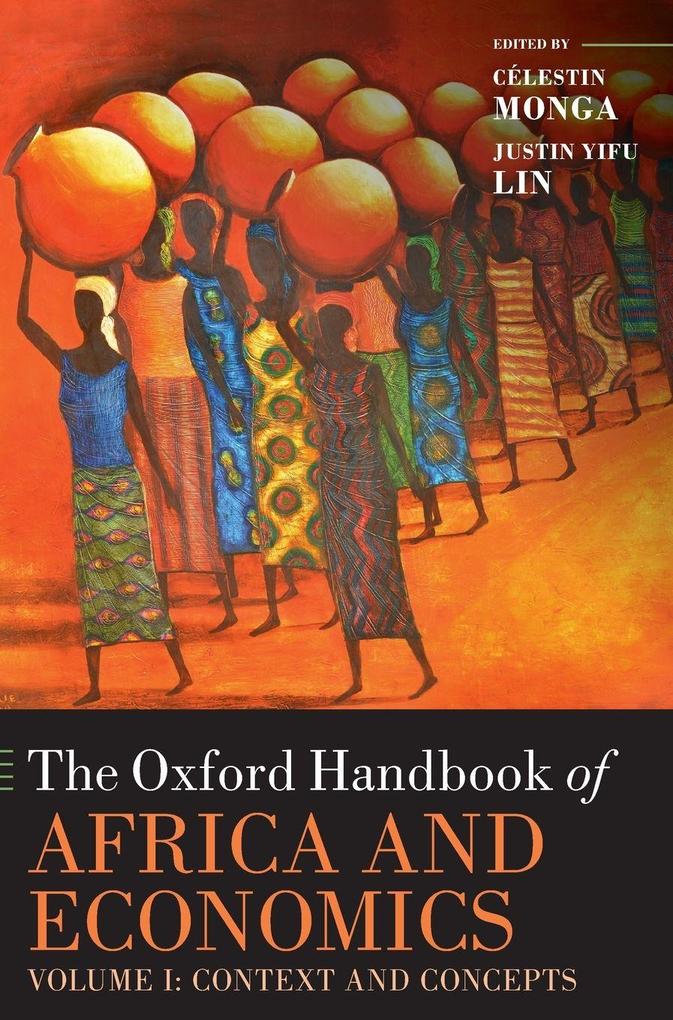
Identifies the central themes, issues, questions, and methods of analysis of economics, and discusses how they have been approached in the African context over time. Reviews and document how the study of African societies has contributed to and shaped major fields of the discipline of economics.
For a long time, economic research on Africa was not seen as a profitable venture intellectually or professionally-few researchers in top-ranked institutions around the world chose to become experts in the field. This was understandable: the reputation of Africa-centered economic research was not enhanced by the well-known limitations of economic data across the continent. Moreover, development economics itself was not always fashionable, and the broader discipline of economics has had its ups and downs, and has been undergoing a major identity crisis because it failed to predict the Great Recession.
Times have changed: many leading researchers-including a few Nobel laureates-have taken the subject of Africa and economics seriously enough to devote their expertise and creativity to it. They have been amply rewarded: the richness, complexities, and subtleties of African societies, civilizations, rationalities, and ways of living, have helped renew the humanities and the social sciences-and economics in particular-to the point that the continent has become the next major intellectual frontier to researchers from around the world.
In collecting some of the most authoritative statements about the science of economics and its concepts in the African context, this handbook (the first of two volumes) opens up the diverse acuity of commentary on exciting topics, and in the process challenges and stimulates the quest for knowledge. Wide-ranging in its scope, themes, language, and approaches, this volume explores, examines, and assesses economic thinking on Africa, and Africa's contribution to the discipline. The editors bring a set of powerful resources to this endeavor, most notably a team of internationally-renowned economists whose diverse viewpoints are complemented by the perspectives of philosophers, political scientists, and anthropologists. The set of analyses and reflections presented here try to endow each subject with depth and discovery.
Inhaltsverzeichnis
- Introduction: Africa, the Next Intellectual Frontier
- Part I: Concepts
- 1: Fabien Eboussi Boulaga: Economics as an African Science: An Epistemological Analysis
- 2: Kathleen Beegle, Gero Carletto, Alberto Zezza, and Benjamin Davis: Households and Income in Africa
- 3: Catherine Guirkinger and Jean-Philippe Platteau: Transformation of African Farm-cum-Family Structures
- 4: Ragui Assaad and Caroline Krafft: The Economics of Marriage in North Africa: A Unifying Theoretical Framework
- 5: Christopher Malikane: The Theory of the Firm in the African Context
- 6: Jane Guyer: Markets and Urban Provisioning
- 7: Alan Gelb, Christian Meyer, and Vijaya Ramachandran: Development as Diffusion: Manufacturing Productivity and Africa's Missing Middle
- 8: Stephen Golub and Faraz Hayat: Employment, Unemployment, and Underemployment in Africa
- 9: Mthuli Ncube: Inclusive Growth in Africa
- 10: Abebe Shimeles: Poverty: Shifting Fortunes and New Perspectives
- 11: Arne Bigsten: Dimensions of African Inequality
- 12: Richard Joseph: Inclusive Growth and Developmental Governance: The Next African Frontiers
- 13: Melissa Thomas: Economics and the Study of Corruption in Africa
- 14: Francois Bourguignon: Thoughts on Development: The African Experience
- 15: Hippolyte Fofack: The Idea of Economic Development: Views from Africa
- Part II: Methodological Issues
- 16: Célestin Monga: Principles of Economics: African Challenges
- 17: Felwine Sarr: Economics and Culture in the African Context
- 18: Laura Camfield: The Economics of Non-Cognitive Skills
- 19: Andrew Berg, Shu-Chun S. Yang, and Luis-Felipe Zanna: Modeling African Economies: A DSGE Approach
- 20: Morten Jerven: Measuring Economic Progress in the African Context
- 21: Patrick Guillaumont: Measuring Structural Economic Vulnerability in Africa
- 22: Célestin Monga: Measuring Democracy: An Economic Approach
- 23: Julius Agbor and Olumide Taiwo: Measurement and Analysis of Competitiveness
- Part III: Historical Trajectories and Economic Landscape
- 24: Paul Collier: Africa's New Economic Opportunities
- 25: Ha-Joon Chang and Christopher Cramer: Tigers or Tiger Prawns? The African growth 'tragedy' and 'renaissance' in perspective
- 26: Warren Whatley: The Economic Legacies of the African Slave Trades
- 27: Gareth Austin: The Economics of Colonialism in Africa
- 28: Olu Ajakaije and Afeikhena Jerome: The Public Private Interface
- 29: Ibrahim Elbadawi and Nadir Mohammed: Natural Resources: Precious Boon or Precious Ban?
- 30: Xubei Luo: Volatility and Vulnerability
- 31: Danny Leipziger, Maria Emila Freire, and Somik Lall: Africa's Urbanization: Challenges and Opportunities
- 32: Tomonori Sudo: Environmental and Climate Change Issues in Africa
- 33: Ahmadou Aly Mbaye and Nancy Benjamin: Informality, Growth and Development in Africa
- 34: Scott D. Taylor: Capitalism and African Business Cultures
- 35: Célestin Monga: African Monetary Unions: An Obituary
- Part IV: The Economics of Political Transformation
- 36: Takaaki Masaki and Nicolas Van de Walle: The Impact of Democracy on Economic Growth in Sub-Saharan Africa, 1982-2012
- 37: Tarik Yousef, Raj M. Desai, and Anders Olofsgård: The Economics of Authoritarianism in North Africa
- 38: Mustapha Nabli and Hakim Ben Hammouda: The Potential Economic Dividends of North African Revolutions
- 39: Anke Hoeffler: The Economics of Violent Conflict and War in Africa
- 40: Juliet Elu and Gregory Price: The Causes and Consequences of Terrorism in Africa
- 41: Mustapha Nabli and Hakim Ben Hammouda: The Political Economy of the New Arab Awakening
- 42: Roger Myerson: Democratic Decentralization and Economic Development
- 43: Nadareh Chamlou: The Economics of Happiness and Anger in North Africa




























![The [Oxford] Handbook of the History of Education](/_next/image?url=https%3A%2F%2Fmedia2.ebook.de%2Fshop%2Fcoverscans%2F373%2F37304882_9780199340033_xl.jpg&w=3840&q=75)