








Das eBook.de Hörbuch Abo - jederzeit, überall, für nur 7,95 € monatlich!
Jetzt entdecken
mehr erfahren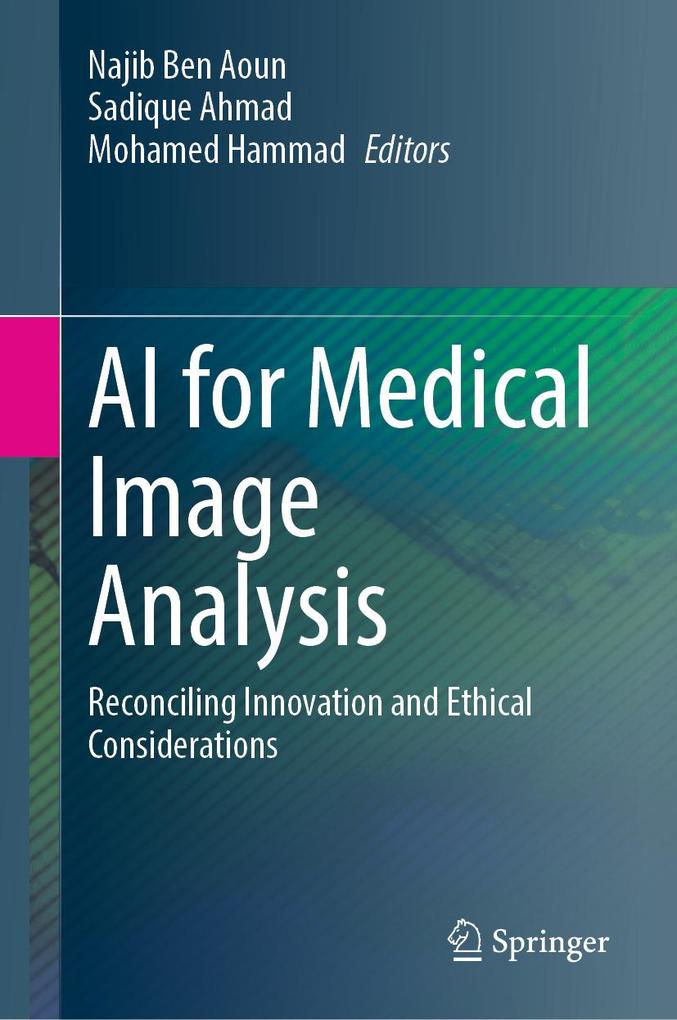
The way doctors identify, treat, and manage illnesses has been completely transformed by the introduction of artificial intelligence (AI) into healthcare. The application of image processing and computer vision technologies is one of the most impactful advancements, which has boosted the accuracy and effectiveness of medical image analysis, enhanced treatment planning and enabled more personalized care. With the use of these technologies, healthcare professionals may now "see beyond" the limits of conventional imaging techniques, gaining deeper understanding and more thorough analyses-both essential for efficient patient care. However, applying AI techniques for medical image analysis has to be conducted while upholding the ethical considerations to ensure the technology benefits patients and healthcare providers while minimizing potential risks. In fact, it is essential to establish a thorough framework that incorporates stringent validation on diverse and representative datasets to mitigate bias and guarantee accuracy across different populations. AI systems must exhibit transparency and explainability, enabling healthcare professionals to comprehend and trust their outputs, while accountability measures distinctly delineate responsibility for AI-generated judgments. In addition, AI systems have to support, not replace, the clinicians, guaranteeing that they continue to play a crucial role in decision-making. The development and deployment of AI-based medica image analysis systems have to be guided by ethical oversight committees to address any emerging issues.
This book, "AI for Medical Image Analysis: reconciling Innovation and ethical considerations," delves into the use of AI in medical image analysis while adhering to ethical considerations. It will cover the technological advancements, applications, strategies and ethical considerations around the use of AI in healthcare imaging. It presents a holistic perspective on how AI-driven computer vision and image processing are reshaping the healthcare landscape and expanding the realm of what is conceivable for medical diagnostics and treatment.
This book will:
Present the current challenges and futures research directions.
Inhaltsverzeichnis
Preface. - Chapter 1 Introduction to AI in Medical Image Analysis. - Chapter 2 Fundamentals of medical image analysis. - Chapter 3 The Role of AI in Enhancing Imaging Modalities. - Chapter 4 Machine Learning for Image Processing in Healthcare. - Chapter 5 Deep Learning Revolution in Medical Image analysis. - Chapter 6 Harnessing Diffusion Models for Advanced Medical Image Analysis. - Chapter 7 AI-Enhanced Tumor Detection and Segmentation. - Chapter 8 Personalized Medicine Through AI-Driven Imaging. - Chapter 9 AI-Driven Medical Image Analysis: Challenges and Limitations. - Chapter 10 Future Directions for AI in Medical Image Analysis. - Chapter 11 Ethical and Regulatory Considerations in AI-Based Imaging. - Chapter 12 AI in Medical Image Analysis: Societal Impact and Inclusivity. - Chapter 13 Conclusion: Seeing Beyond AI' s Promising Future in Medical Image Analysis.
Es wurden noch keine Bewertungen abgegeben. Schreiben Sie die erste Bewertung zu "AI for Medical Image Analysis" und helfen Sie damit anderen bei der Kaufentscheidung.