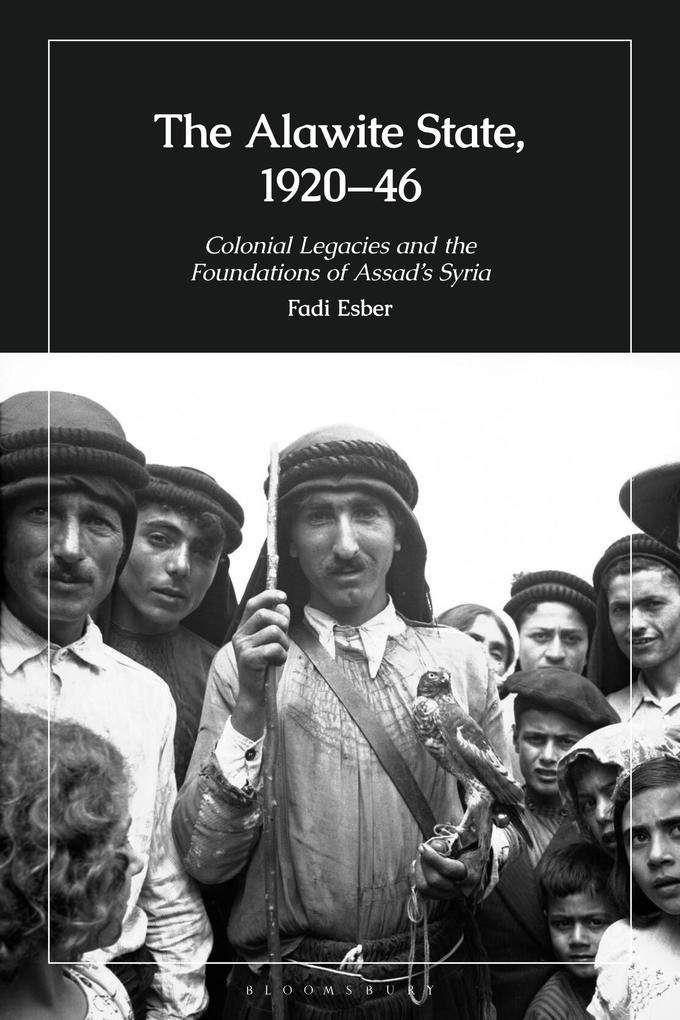
The Alawite State (1920-1946) was a politically autonomous entity created under the French Mandate for Syria.
This book is the first in-depth study dedicated to this state experience. Fadi Esber argues that the Alawite State was not merely a colonial construct. It was a transformative political experiment that reshaped Alawite identity, redefined their role in Syrian politics, and propelled them into modern political life. Crucially, he shows that this period of history shaped the political consciousness of the generation of Alawites that later took power in Damascus, notably, Hafez al-Assad and his inner circle who grew up in an era when Alawites, for the first time, were active participants in Syria's political landscape.
By linking colonial history with contemporary politics, this book illuminates the enduring legacies of the French Mandate in shaping Syria's fragile sectarian and political future. Using untapped French, British and Syrian archival sources, the study provides a solid analysis of the Alawite State in the framework of colonialism and modern nation building the Middle East.
Inhaltsverzeichnis
Acknowledgements.
Introduction.
One Thousand Years of Solitude: The Alawites of Syria Before the French Mandate.
From Margins to Autonomy: The Birth of the Alawite State (1918-1924)
Tribalism and Sectarianism: Alawite Politics Under French Rule, 1925-1936.
The Hour of Decision: The Alawites and the 1936 Franco-Syrian Treaty.
From Autonomy to Forced Integration: The Decline of the Alawite State, 1936-1946.
Ideology and Transformation: Alawite Peasants and Intellectuals During the Mandate.
The Colonial Legacy in Assad's Syria.
Conclusion.
Bibliography.