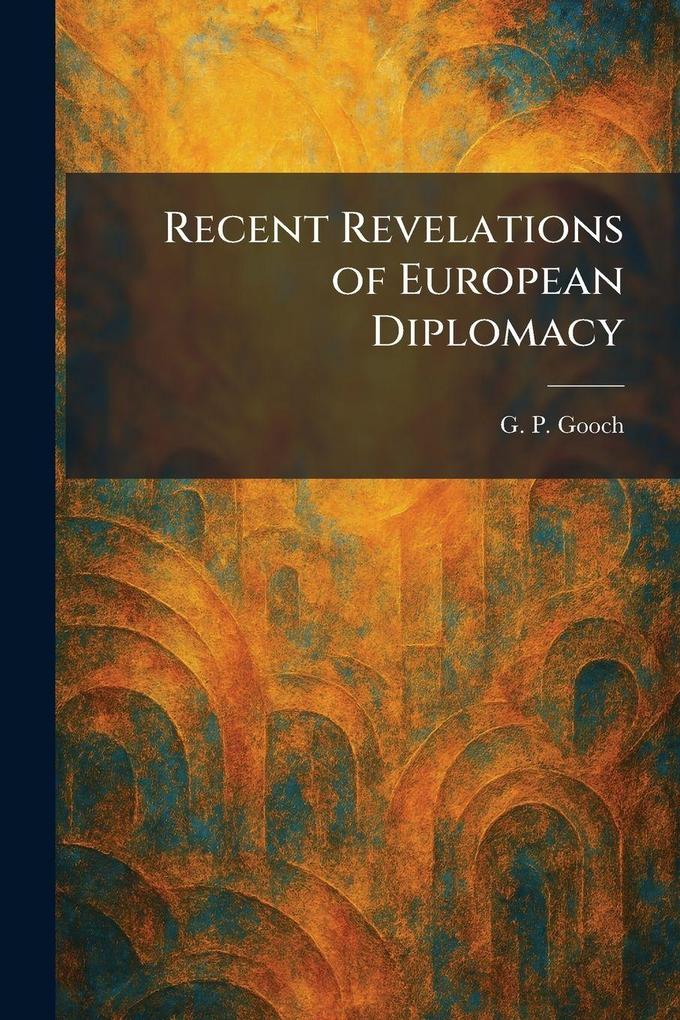
"Recent Revelations of European Diplomacy" is an authoritative and scholarly examination of the complex web of international relations that defined the early twentieth century. Written by the esteemed historian G. P. Gooch, this work provides a meticulous analysis of the diplomatic maneuvers, secret treaties, and political tensions that culminated in the outbreak of the First World War. Drawing upon a wealth of primary source materials, including memoirs, diaries, and official state papers released in the aftermath of the conflict, Gooch offers readers an objective look at the foreign policies of the great European powers.
Spanning the crucial years of the late nineteenth and early twentieth centuries, the book delves into the collapse of the balance of power and the rise of the alliance systems. Gooch's scholarly approach offers a balanced perspective on the causes of the conflict and the structural failures of international politics. "Recent Revelations of European Diplomacy" remains an essential resource for students of history, political science, and diplomacy, offering timeless insights into the challenges of maintaining peace in a fragmented world.
This work has been selected by scholars as being culturally important, and is part of the knowledge base of civilization as we know it. This work was reproduced from the original artifact, and remains as true to the original work as possible. Therefore, you may see the original copyright references, library stamps (as most of these works have been housed in our most important libraries around the world), and other notations in the work.
This work is in the public domain in the United States of America, and possibly other nations. Within the United States, you may freely copy and distribute this work, as no entity (individual or corporate) has a copyright on the body of the work.
As a reproduction of a historical artifact, this work may contain missing or blurred pages, poor pictures, errant marks, etc. Scholars believe, and we concur, that this work is important enough to be preserved, reproduced, and made generally available to the public. We appreciate your support of the preservation process, and thank you for being an important part of keeping this knowledge alive and relevant.