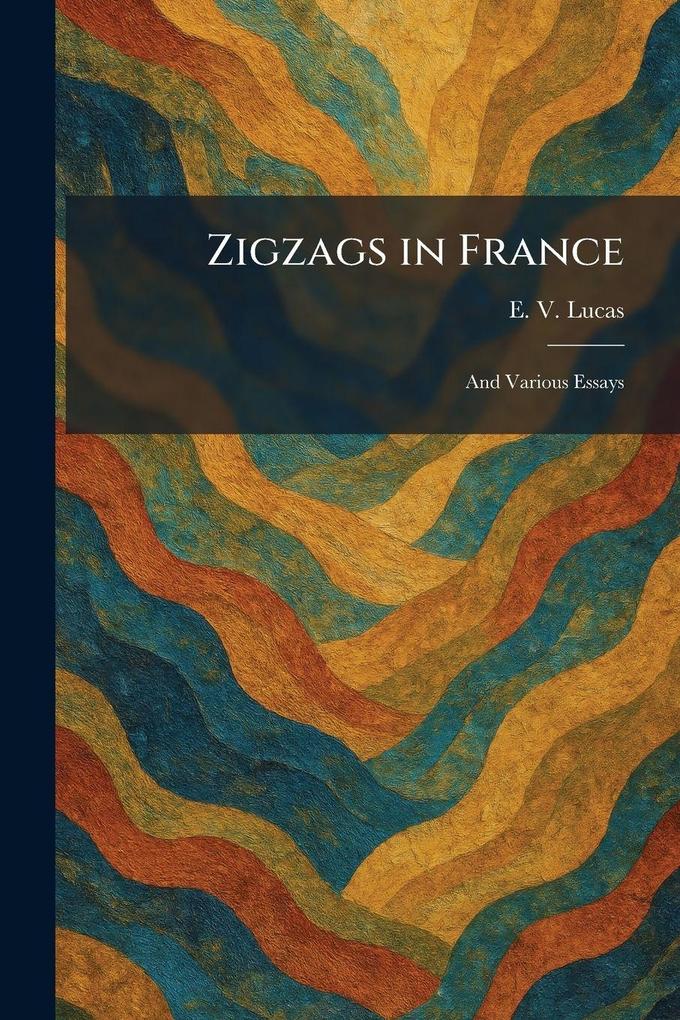
In "Zigzags in France, and Various Essays", E. V. Lucas offers a charming collection of travel sketches and insightful reflections that capture the essence of early 20th-century exploration. The primary focus of the work is a leisurely motor tour through the French countryside, where Lucas's observant eye and witty prose bring to life the small towns, local customs, and picturesque landscapes of post-war France. His "zigzags" are not merely geographical but also intellectual, wandering through various observations on human nature and the beauty of the mundane.
Beyond the travelogues, the volume includes a series of "various essays" that showcase Lucas's mastery of the familiar essay form. These pieces touch upon a wide range of topics-from art and literature to the simple pleasures of daily life-all delivered with the light touch and gentle urbanity for which the author was celebrated. As a prominent figure in the British literary scene, Lucas provides a window into a bygone era of travel, emphasizing the value of curiosity and the joy of the unexpected journey. This work remains a testament to the enduring appeal of the literary travelogue and the art of the personal essay.
This work has been selected by scholars as being culturally important, and is part of the knowledge base of civilization as we know it. This work was reproduced from the original artifact, and remains as true to the original work as possible. Therefore, you may see the original copyright references, library stamps (as most of these works have been housed in our most important libraries around the world), and other notations in the work.
This work is in the public domain in the United States of America, and possibly other nations. Within the United States, you may freely copy and distribute this work, as no entity (individual or corporate) has a copyright on the body of the work.
As a reproduction of a historical artifact, this work may contain missing or blurred pages, poor pictures, errant marks, etc. Scholars believe, and we concur, that this work is important enough to be preserved, reproduced, and made generally available to the public. We appreciate your support of the preservation process, and thank you for being an important part of keeping this knowledge alive and relevant.