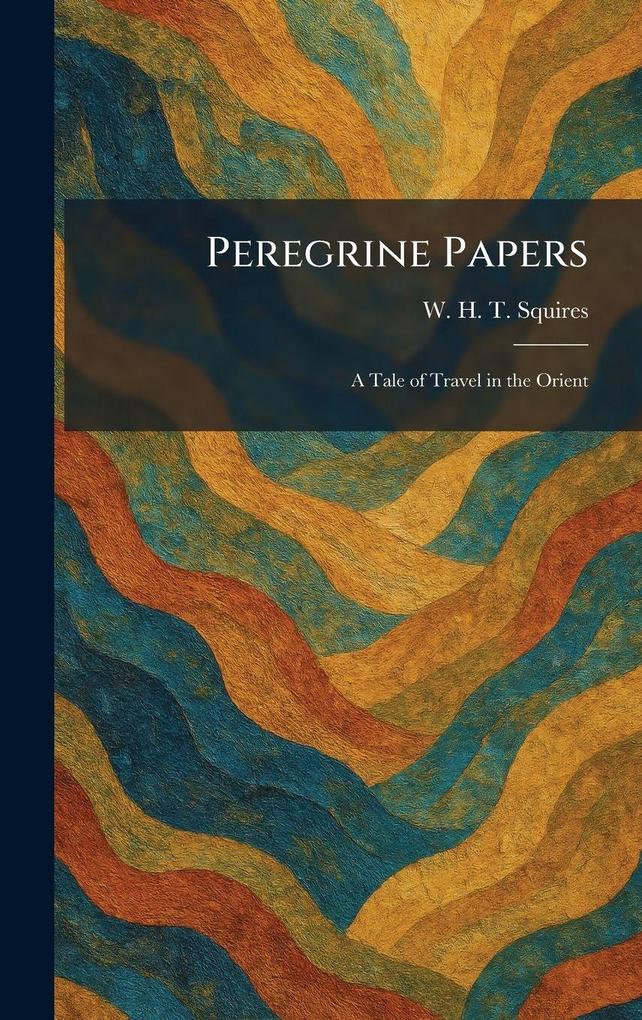
"Peregrine Papers: A Tale of Travel in the Orient" is an evocative and personal travelogue that invites readers to experience the vibrant landscapes and rich cultures of the East during the early twentieth century. Written by W.H.T. Squires, this work documents a journey through regions once collectively known as the Orient, capturing the essence of a world in transition following the first World War. The narrative is filled with detailed observations of the monuments, bustling marketplaces, and timeless traditions of the Near and Middle East, presented through the lens of a keen and curious traveler.
As both an adventurous chronicle and a reflective historical record, "Peregrine Papers: A Tale of Travel in the Orient" offers a window into the Western fascination with Eastern heritage and daily life. Squires blends personal anecdotes with broader cultural commentary, making the work a significant example of early modern travel literature. For readers interested in the history of global exploration, the evolution of cross-cultural perspectives, and the enduring beauty of the Eastern world, this volume remains a compelling and informative primary source that preserves the sights and sounds of a bygone era.
This work has been selected by scholars as being culturally important, and is part of the knowledge base of civilization as we know it. This work was reproduced from the original artifact, and remains as true to the original work as possible. Therefore, you may see the original copyright references, library stamps (as most of these works have been housed in our most important libraries around the world), and other notations in the work.
This work is in the public domain in the United States of America, and possibly other nations. Within the United States, you may freely copy and distribute this work, as no entity (individual or corporate) has a copyright on the body of the work.
As a reproduction of a historical artifact, this work may contain missing or blurred pages, poor pictures, errant marks, etc. Scholars believe, and we concur, that this work is important enough to be preserved, reproduced, and made generally available to the public. We appreciate your support of the preservation process, and thank you for being an important part of keeping this knowledge alive and relevant.