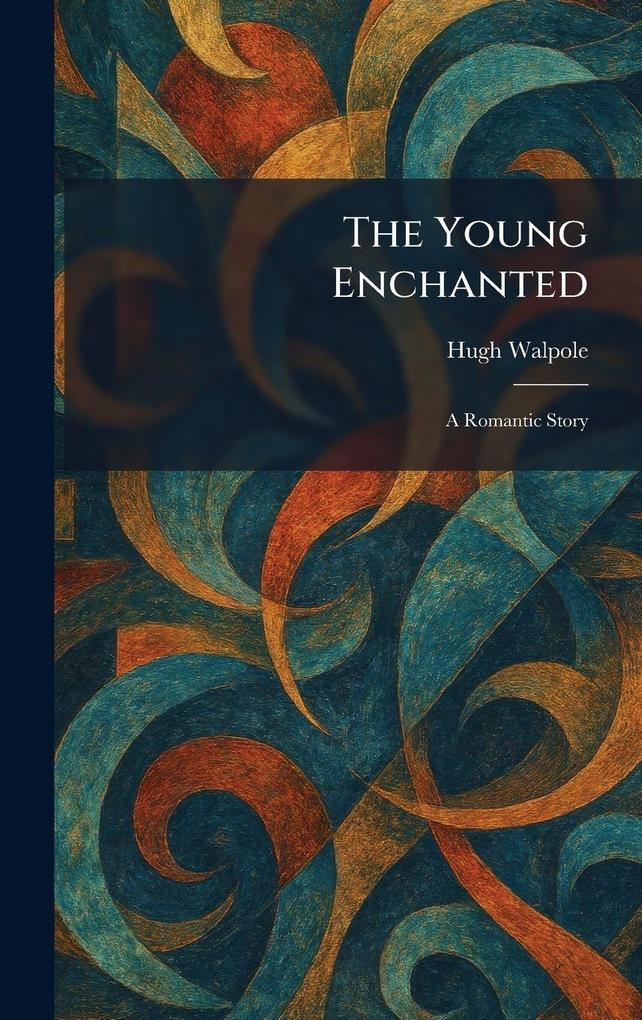
"The Young Enchanted: A Romantic Story" follows the intertwined lives of siblings Henry and Millicent Trenchard as they navigate the vibrant and often bewildering landscape of post-World War I London. Written by Hugh Walpole, this novel captures the spirit of youth as it confronts a world in transition, where the lingering echoes of the Victorian era meet the burgeoning modern age.
Henry, an idealistic young man working for an eccentric employer, finds himself swept into a whirlwind of romantic intrigue and artistic discovery. Meanwhile, Millicent seeks her own path through the social complexities of the city, balancing her aspirations with the realities of her station. Together, they represent the "enchanted" youth of their generation-dreamers who seek magic and meaning amidst the mundane struggles of daily life. Walpole's narrative is rich with character studies and atmospheric depictions of 1920s London, from its quiet bookshops to its bustling streets.
A compelling blend of romance and social commentary, "The Young Enchanted: A Romantic Story" offers a poignant exploration of growth, disillusionment, and the enduring power of hope. It remains a significant work of early 20th-century British literature, reflecting the delicate balance between the traditions of the past and the uncertainty of the future.
This work has been selected by scholars as being culturally important, and is part of the knowledge base of civilization as we know it. This work was reproduced from the original artifact, and remains as true to the original work as possible. Therefore, you may see the original copyright references, library stamps (as most of these works have been housed in our most important libraries around the world), and other notations in the work.
This work is in the public domain in the United States of America, and possibly other nations. Within the United States, you may freely copy and distribute this work, as no entity (individual or corporate) has a copyright on the body of the work.
As a reproduction of a historical artifact, this work may contain missing or blurred pages, poor pictures, errant marks, etc. Scholars believe, and we concur, that this work is important enough to be preserved, reproduced, and made generally available to the public. We appreciate your support of the preservation process, and thank you for being an important part of keeping this knowledge alive and relevant.