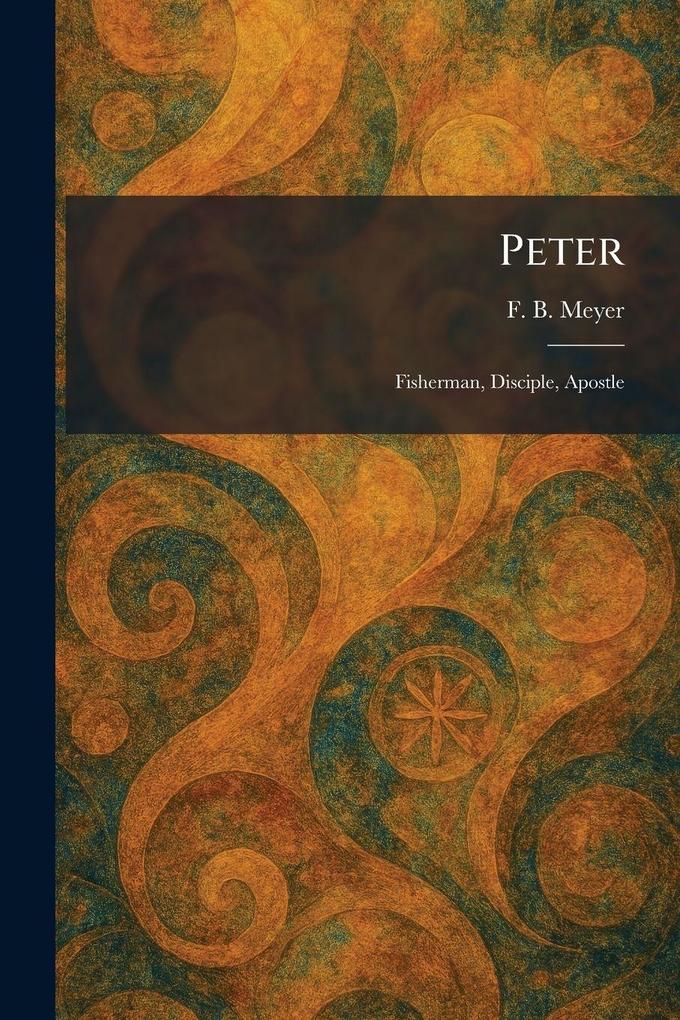
In "Peter: Fisherman, Disciple, Apostle," F. B. Meyer provides a profound and sympathetic exploration of one of the most relatable figures in the New Testament. Through a series of insightful chapters, Meyer traces the spiritual evolution of Simon Peter, from his humble beginnings on the shores of Galilee to his pivotal role as a primary leader of the early Christian Church. The narrative captures the raw humanity of Peter-his impulsive devotion, his moments of failure, and his ultimate restoration through the grace of Christ.
Meyer's work delves deep into the psychological and spiritual dimensions of Peter's experiences, offering readers a roadmap for their own journeys of faith. By examining key events such as Peter's calling, his walk upon the water, the confession at Caesarea Philippi, and the transformative power of Pentecost, the author illustrates the persistent work of the Holy Spirit in a believer's life. "Peter: Fisherman, Disciple, Apostle" remains a timeless resource for those seeking to understand the complexities of discipleship and the enduring power of divine forgiveness. This biographical study is essential reading for students of the Bible, clergy, and anyone looking for encouragement in their personal walk with God.
This work has been selected by scholars as being culturally important, and is part of the knowledge base of civilization as we know it. This work was reproduced from the original artifact, and remains as true to the original work as possible. Therefore, you may see the original copyright references, library stamps (as most of these works have been housed in our most important libraries around the world), and other notations in the work.
This work is in the public domain in the United States of America, and possibly other nations. Within the United States, you may freely copy and distribute this work, as no entity (individual or corporate) has a copyright on the body of the work.
As a reproduction of a historical artifact, this work may contain missing or blurred pages, poor pictures, errant marks, etc. Scholars believe, and we concur, that this work is important enough to be preserved, reproduced, and made generally available to the public. We appreciate your support of the preservation process, and thank you for being an important part of keeping this knowledge alive and relevant.