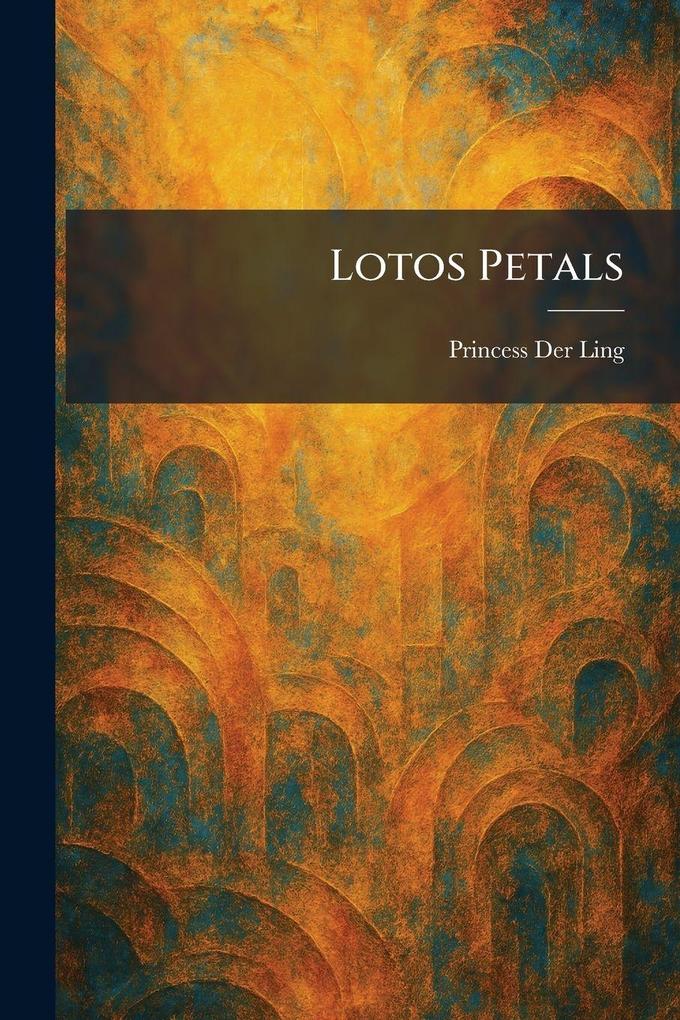
"Lotos Petals" is an evocative collection of memoirs, essays, and traditional folklore written by Princess Der Ling, a former lady-in-waiting to the Empress Dowager Cixi. Offering a rare and intimate glimpse into the inner workings of the Forbidden City, this work serves as a cultural bridge, detailing the intricate rituals and daily life of the Chinese imperial court during the waning years of the Qing Dynasty. The book is structured as a series of vignettes that blend personal observation with rich cultural history. Through her unique perspective as a Chinese noblewoman educated in the West, Princess Der Ling explores the complexities of imperial etiquette, the beauty of traditional ceremonies, and the enduring power of Chinese myths and legends. Her narratives provide invaluable insight into the character of the Empress Dowager and the lived experiences of those residing within the palace walls.
With its focus on historical preservation and cross-cultural understanding, "Lotos Petals" remains a significant literary contribution for readers interested in Asian history, royal biography, and the social transformations of the early twentieth century. This work captures the elegance and atmosphere of a vanished world with grace and historical authority.
This work has been selected by scholars as being culturally important, and is part of the knowledge base of civilization as we know it. This work was reproduced from the original artifact, and remains as true to the original work as possible. Therefore, you may see the original copyright references, library stamps (as most of these works have been housed in our most important libraries around the world), and other notations in the work.
This work is in the public domain in the United States of America, and possibly other nations. Within the United States, you may freely copy and distribute this work, as no entity (individual or corporate) has a copyright on the body of the work.
As a reproduction of a historical artifact, this work may contain missing or blurred pages, poor pictures, errant marks, etc. Scholars believe, and we concur, that this work is important enough to be preserved, reproduced, and made generally available to the public. We appreciate your support of the preservation process, and thank you for being an important part of keeping this knowledge alive and relevant.