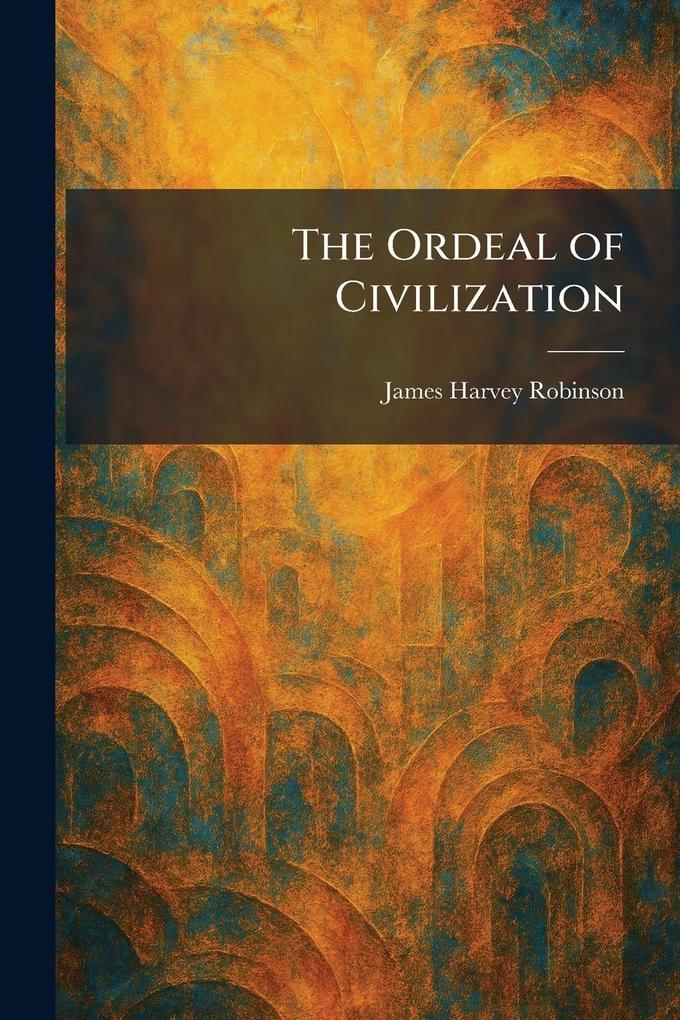
"The Ordeal of Civilization" is a sweeping historical narrative that traces the evolution of Western society from its earliest foundations to the complexities of the early twentieth century. Written by the influential historian James Harvey Robinson, a pioneer of the "New History" movement, this work shifts the scholarly focus away from a mere chronology of battles and monarchs toward a deeper exploration of the intellectual, social, and cultural shifts that have shaped the human experience.
The book examines how humanity has grappled with the challenges of progress, the transformation of institutions, and the persistent influence of the past on contemporary thought. Robinson explores the long journey of civilization from the prehistoric era and the fall of the Roman Empire through the Middle Ages and the Enlightenment, concluding with the profound upheavals of the modern age. The narrative emphasizes the evolution of the human mind and the persistent struggle to overcome outmoded traditions in favor of rational and scientific inquiry. By analyzing the growth of knowledge and the impact of the Industrial Revolution, "The Ordeal of Civilization" provides a comprehensive framework for understanding the forces that constructed the modern world, making it an essential text for students of world history and social development.
This work has been selected by scholars as being culturally important, and is part of the knowledge base of civilization as we know it. This work was reproduced from the original artifact, and remains as true to the original work as possible. Therefore, you may see the original copyright references, library stamps (as most of these works have been housed in our most important libraries around the world), and other notations in the work.
This work is in the public domain in the United States of America, and possibly other nations. Within the United States, you may freely copy and distribute this work, as no entity (individual or corporate) has a copyright on the body of the work.
As a reproduction of a historical artifact, this work may contain missing or blurred pages, poor pictures, errant marks, etc. Scholars believe, and we concur, that this work is important enough to be preserved, reproduced, and made generally available to the public. We appreciate your support of the preservation process, and thank you for being an important part of keeping this knowledge alive and relevant.