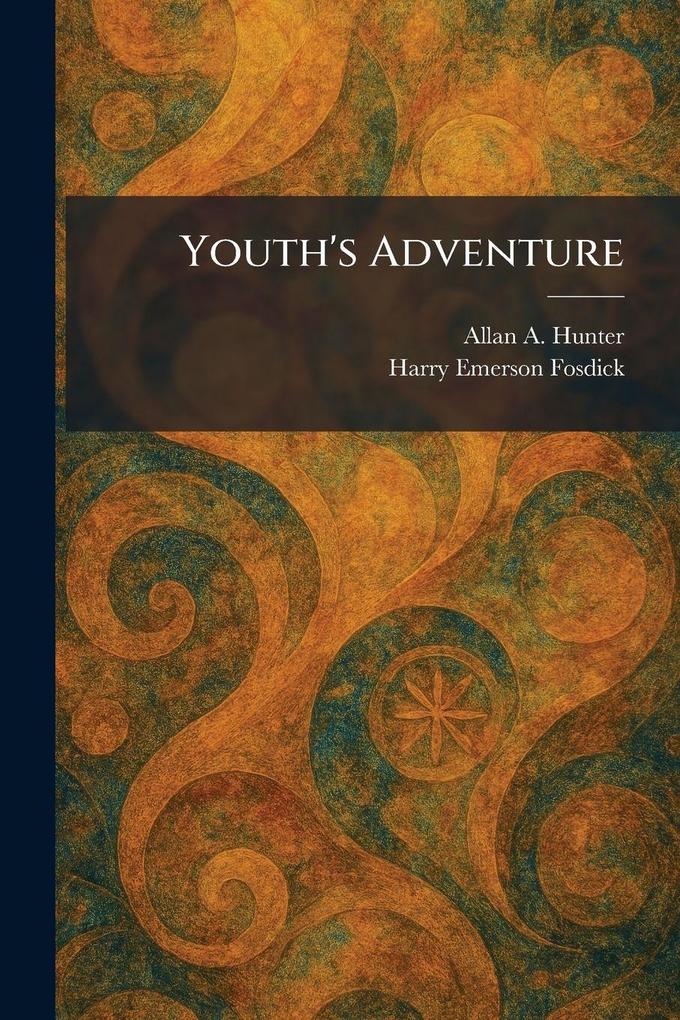
"Youth's Adventure" is an insightful exploration of the idealism, social consciousness, and spiritual aspirations of the younger generation during the transformative years following World War I. Co-authored by Allan A. Hunter with an introduction by the influential liberal clergyman Harry Emerson Fosdick, this work serves as both a manifesto and a guide for young people seeking to navigate the complexities of the modern world with purpose and integrity.
The book delves into the restless spirit of a generation eager to break away from stagnant traditions in favor of a more active, socially responsible faith. Through a series of compelling reflections, the authors address the challenges of racial reconciliation, international peace, and the application of ethical principles to contemporary social problems. "Youth's Adventure" emphasizes that the vigor of youth is a vital force for global progress, advocating for a religion that is intellectually honest and deeply engaged with the needs of humanity.
A significant historical document of the early twentieth-century liberal religious movement, this work highlights the intersection of personal spirituality and collective action. It remains a poignant study of the perennial quest for meaning, offering a vision of hope and a call to moral courage that continues to resonate with readers interested in the history of social activism and religious thought.
This work has been selected by scholars as being culturally important, and is part of the knowledge base of civilization as we know it. This work was reproduced from the original artifact, and remains as true to the original work as possible. Therefore, you may see the original copyright references, library stamps (as most of these works have been housed in our most important libraries around the world), and other notations in the work.
This work is in the public domain in the United States of America, and possibly other nations. Within the United States, you may freely copy and distribute this work, as no entity (individual or corporate) has a copyright on the body of the work.
As a reproduction of a historical artifact, this work may contain missing or blurred pages, poor pictures, errant marks, etc. Scholars believe, and we concur, that this work is important enough to be preserved, reproduced, and made generally available to the public. We appreciate your support of the preservation process, and thank you for being an important part of keeping this knowledge alive and relevant.