








Das eBook.de Hörbuch Abo - jederzeit, überall, für nur 7,95 € monatlich!
Jetzt entdecken
mehr erfahren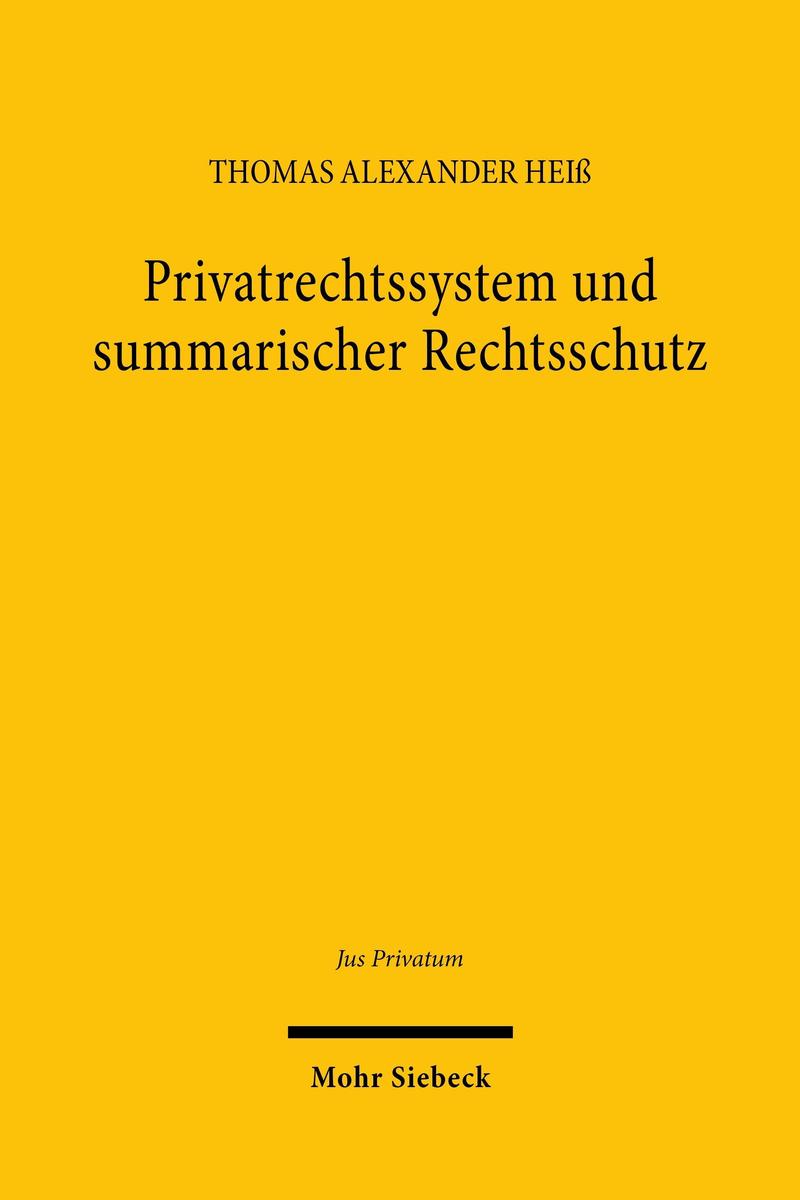
Summary proceedings are a mode of enforcing subjective rights that deviates in characteristic ways from the general standards of legal enforcement.
This particular, "abridged" form of legal protection-confined to the field of private law-is the subject of this book. It examines its intellectual and institutional history in Roman and ius commune civil procedure, its epistemological and legal-theoretical foundations, its principles and inherent structural rules, as well as the system of procedural and substantive configurations it has produced in contemporary German private law. Particular attention is given to documentary, bill of exchange, and cheque proceedings, interim relief, intermediate substantive rights, default rules in civil procedure, and the order for payment procedure.
Reducing these individual forms to a common underlying pattern requires identifying and explaining that from which summary proceedings deviate. A theory of summary proceedings is therefore only possible within the framework of a coherent theory of legal protection. Many of the questions raised in explaining summary forms directly concern the foundations of the entire private law system, in particular the relationship between substantive individual rights and their procedural enforcement, as well as the legal system's handling of uncertainty. As a borderline case of legal protection, summary proceedings cast these fundamental issues in a new light: if summary protection is to be understood as part of the private law system, some of its foundational structures must be conceptualized differently than is typically done with regard to "standard" cases. It is here that the greatest potential of summary proceedings for civil law doctrine lies.
This study seeks to unlock that potential. It lays the groundwork for a coherent doctrinal reconstruction of summary remedies that avoids systemic inconsistencies, while also providing guidance for the development of new instruments of this kind.
Inhaltsverzeichnis
Buch I
Erster Teil: Grundlagen einer Theorie des summarischen Rechtsschutzes
A. Ideengeschichtliche Hintergründe
B. Summarischer Rechtsschutz im Privatrecht der Gegenwart: Bestandsaufnahme und Präzisierung des Bezugspunkts der Summarietät
C. Summarietät: Rechtstheoretische Grundlagen und positivrechtliche Erscheinungsformen
Zweiter Teil: Ein System der summarischen Rechtsschutzmittel im geltenden Privatrecht
A. Urkundenprozess nach §§ 592 ff. ZPO
B. Einstweiliger Rechtsschutz, §§ 916 ff. ZPO
C. Materielle Zwischenrechte
D. Säumnisfolgen, §§ 330 ff. ZPO
E. Mahnverfahren, §§ 688 ff. ZPO
F. Weitere Fälle (ggf.) summarischer Beurteilung in der ZPO und im BGB
G. Verfassungsrechtliche und menschenrechtliche Vorgaben
Buch II
Erster Teil: Die möglichen Träger" summarischen Schutzes - das summarisch geltend gemachte Recht
A. Rechtsschutz mit und ohne Anspruchsgrundlage im materiellen Recht
B. Der Bezugsrahmen der Erklärung beider Wege: Das Verhältnis von materiellem Einzelrecht und Prozessrecht
C. Das Problem der rein prozessualen" Rechtsbehelfe: Materiale Konstanten bei formaler Vielfalt
D. Das Sanktionsmodell" im System des Zivilrechtsschutzes
E. Die Struktur der summarischen Rechtsbehelfe
Zweiter Teil: Rechtsschutz und Wahrscheinlichkeit
A. Vorüberlegung: Der Schutz des wahrscheinlichen Rechts
B. Die prozessualen Feststellungsschwellen für streitige Tatsachen
C. Probabilistische" Tatbestandsgestaltung
D. Zusammenfassung und Ausblick
Es wurden noch keine Bewertungen abgegeben. Schreiben Sie die erste Bewertung zu "Privatrechtssystem und summarischer Rechtsschutz" und helfen Sie damit anderen bei der Kaufentscheidung.