






Das eBook.de Hörbuch Abo - jederzeit, überall, für nur 7,95 € monatlich!
Jetzt entdecken
mehr erfahren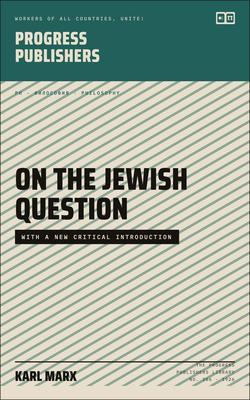
The two essays here were written by a man of twenty-five who had not yet become Marx.
In the winter of 1843-44, newly married and newly exiled to Paris, he helped edit a single double issue of a journal with a hopeful, unwieldy name - the Deutsch-Franzosische Jahrbucher, meant to marry German philosophy to French politics. Only that one issue ever appeared. It carried these two pieces: an introduction to a longer, unpublished critique of Hegel's philosophy of right, and a review-essay on the writings of Bruno Bauer under the title On the Jewish Question. Between them they mark the exact place where a brilliant young Hegelian stopped criticising heaven and turned to criticise the earth.
Read the critique first, because it is the manifesto of everything that follows. In a few dense pages the young Marx sets down, almost as slogans, ideas he would spend a lifetime working out: that the criticism of religion is the basis of all criticism, that man makes religion rather than religion man, and the passage on religion as the sigh of the oppressed and the spirit of a spiritless world that is almost always quoted in half.
The companion essay is the most contested text in the canon - the one his enemies quote and his followers explain away. It was given a full critical apparatus late in life by Daniel Bensaid, a leader of the Fourth International, as one job among several, and the question of why he bothered is worth asking.
A note on the text: this edition uses H. J. Stenning's 1926 English rendering, a public-domain translation of its period - a little stiff, fond of "man" where a later hand would write "human being" - reproduced honestly as what it is.
New critical introduction by Dmitry Chasovennikov.
Es wurden noch keine Bewertungen abgegeben. Schreiben Sie die erste Bewertung zu "On the Jewish Question" und helfen Sie damit anderen bei der Kaufentscheidung.