








Das eBook.de Hörbuch Abo - jederzeit, überall, für nur 7,95 € monatlich!
Jetzt entdecken
mehr erfahren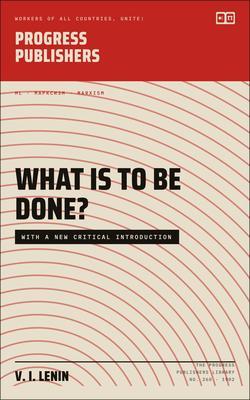
No pamphlet of the twentieth century has been made to carry a heavier load of later meaning.
It was written at the end of 1901 and the beginning of 1902 by a thirty-one-year-old exile signing himself N. Lenin, to settle a quarrel inside a small, illegal and quarrelsome movement. Half a century later the state that traced its lineage to that movement had turned it into scripture - the founding charter, in the official phrase, of a party of a new type. The distance between the occasion and the use is the whole story of the book.
The occasion first. By 1901 Russian Social-Democracy was a scatter of local study circles, each producing its own leaflets, most absorbed in the day-to-day grievances of the factory. Writing from abroad for the new paper Iskra, Lenin set out to break the hold of what he called Economism - the tendency to confine the workers' movement to wage demands and let socialist politics look after itself.
Against it he argued three things that still read with force. That theory is not a luxury, since a movement which despises it hands its members over to whatever ideas are already in the air, and in a class society those are the ruling class's. That politics cannot be improvised from the shop floor but must reach into the relationships of all classes to the state. And that under a police regime an amateur, decentralised movement would simply be arrested piecemeal, so survival required a core of trained full-time organisers bound together by a single national paper.
Read whole, and in its setting, it is stranger and more attractive than its reputation.
New critical introduction by Dmitry Chasovennikov.
Es wurden noch keine Bewertungen abgegeben. Schreiben Sie die erste Bewertung zu "What Is To Be Done?" und helfen Sie damit anderen bei der Kaufentscheidung.