





Das eBook.de Hörbuch Abo - jederzeit, überall, für nur 7,95 € monatlich!
Jetzt entdecken
mehr erfahren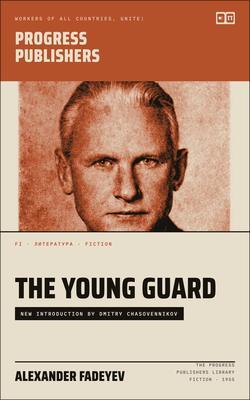
The Young Guard appeared in 1945, about a real thing: a clandestine Komsomol organisation in the mining town of Krasnodon in the occupied Donbass, most of its members still at school, who printed leaflets, burned a German labour exchange, and were caught, tortured and thrown down a mineshaft in the winter of 1943. Fadeyev wrote it fast, from the scene and from the survivors' families, and it made him the most widely read novelist in the Soviet Union.
At the end of 1947 the novel was attacked in the Party press for a specific fault. It had shown the young people acting largely on their own, and had failed to show the leading role of the Party. Fadeyev rewrote it. The second version, with an underground Party organisation installed as the guiding hand, came out in 1951 and superseded the first.
This English edition is the second version, and nowhere says so. Filipp Petrovich Lyutikov, secretary of the underground district committee, is named two hundred and thirty-five times; Protsenko, who plants him in Krasnodon, two hundred and thirty-two. Neither was in the book that made Fadeyev famous.
The text is the Foreign Languages Publishing House printing of 1955, translated by Violet Dutt, reproduced complete. A new critical introduction, written for this edition, sets out what was changed and why it matters.
Es wurden noch keine Bewertungen abgegeben. Schreiben Sie die erste Bewertung zu "The Young Guard" und helfen Sie damit anderen bei der Kaufentscheidung.