







Das eBook.de Hörbuch Abo - jederzeit, überall, für nur 7,95 € monatlich!
Jetzt entdecken
mehr erfahren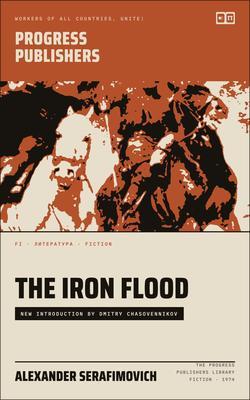
The novel opens with something nobody can identify. Dust smothers a Cossack village, leaving visible only the dark tops of the poplars, and out of it comes a din of dogs, horses, children crying, men swearing, a drunken accordion, as though a huge beehive had lost its queen. Above it the kites turn their hooked beaks to right and to left, making nothing of it, for never before had there been such a sight. Was it a country fair? Where then were the tents and traders? Was it a settlers' camp? But why the guns and limber-chests?
What it is, is the Taman army of 1918: a column of soldiers, women, children, carts and cattle, cut off on the Black Sea coast and marching through the mountains to rejoin the Reds. Serafimovich wrote it in 1924, at sixty-one, after thirty-five years as a writer, and it became one of the founding texts of the Soviet novel.
It is a book about a crowd becoming an army, and its subject is the process rather than any one person in it. The prose is closer to reportage than to the socialist realism that followed, which is why it survives better than most of its contemporaries.
The text is the Progress Publishers Fourth Revised Edition of 1974, in the Soviet Authors Library, reproduced complete. The English is credited only as translated from the Russian; no translator is named and none has been invented.
Es wurden noch keine Bewertungen abgegeben. Schreiben Sie die erste Bewertung zu "The Iron Flood" und helfen Sie damit anderen bei der Kaufentscheidung.