






Das eBook.de Hörbuch Abo - jederzeit, überall, für nur 7,95 € monatlich!
Jetzt entdecken
mehr erfahren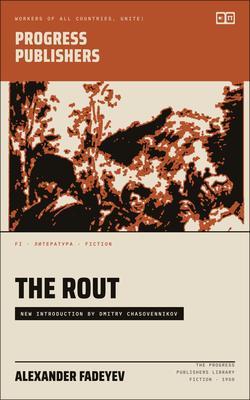
A partisan detachment in the Far East is retreating in 1919, and it has a wounded man who cannot be moved and will not recover. The commander and the doctor agree to poison him. Levinson asks whether it can be done today, whether anyone will suspect, and above all whether the man himself will know.
That commander is this novel's hero. He is a Bolshevik, he is Jewish, he is small and red-bearded and physically unimpressive, and across nineteen chapters he holds a hundred and fifty hungry men together by force of will, loses almost all of them, and ends the book weeping in front of strangers. He also takes a starving Korean family's only pig, the meat that was to feed them through the winter.
Fadeyev wrote The Rout in 1925 and 1926, in his middle twenties. Twenty-five years later he was General Secretary of the Union of Soviet Writers, rewriting his own war novel to insert the Party's guiding hand. This series holds both books, and the distance between them is the point.
The text is the Foreign Languages Publishing House printing of 1950, in the Library of Selected Soviet Literature, translated by O. Gorchakov. It is reproduced complete and unaltered. What has been added is a new critical introduction, written for this edition, on what a novel of the civil war was permitted to contain before the doctrine hardened.
Es wurden noch keine Bewertungen abgegeben. Schreiben Sie die erste Bewertung zu "The Rout" und helfen Sie damit anderen bei der Kaufentscheidung.