








Das eBook.de Hörbuch Abo - jederzeit, überall, für nur 7,95 € monatlich!
Jetzt entdecken
mehr erfahren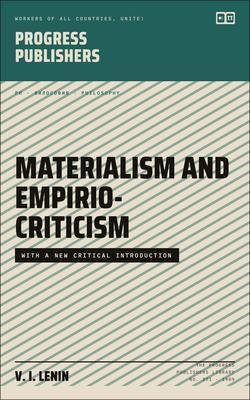
Of all Lenin's books, this is the one that travelled furthest from what it was to what it was made to mean.
He wrote it in 1908, in the grey years after the defeat of the 1905 revolution, and he wrote it in anger at his own comrades. A group of talented Bolsheviks - Alexander Bogdanov above all, with Lunacharsky and Bazarov - had grown enchanted with the most fashionable philosophy of the day, the empirio-criticism of the physicist Ernst Mach and the philosopher Richard Avenarius, a positivism that dissolved the material world into bundles of sensation. Lenin thought this a betrayal of the materialist foundations of Marxism and set out to demolish it.
Taken on its own terms it has real force. His target is the idea that the world is only what we perceive of it - that physics had shown matter to have disappeared - and against it he insists on a world existing independently of any mind observing it, in the definition Soviet students would recite for eighty years. Knowledge, on this account, is a reflection of a reality that does not depend on us.
The chapters on the crisis in the physics of his own moment are the most interesting part of the book, and among the earliest sustained attempts by a political writer to take the philosophical implications of the new science seriously.
What he produced was a factional weapon aimed at particular men in a particular quarrel. What the Soviet state made of it a generation later was the official philosophy of a sixth of the earth.
Translated by Abraham Fineberg.
New critical introduction by Dmitry Chasovennikov.
Es wurden noch keine Bewertungen abgegeben. Schreiben Sie die erste Bewertung zu "Materialism and Empirio-Criticism" und helfen Sie damit anderen bei der Kaufentscheidung.